Roskilde, Denmark – A Great Alternative to Copenhagen

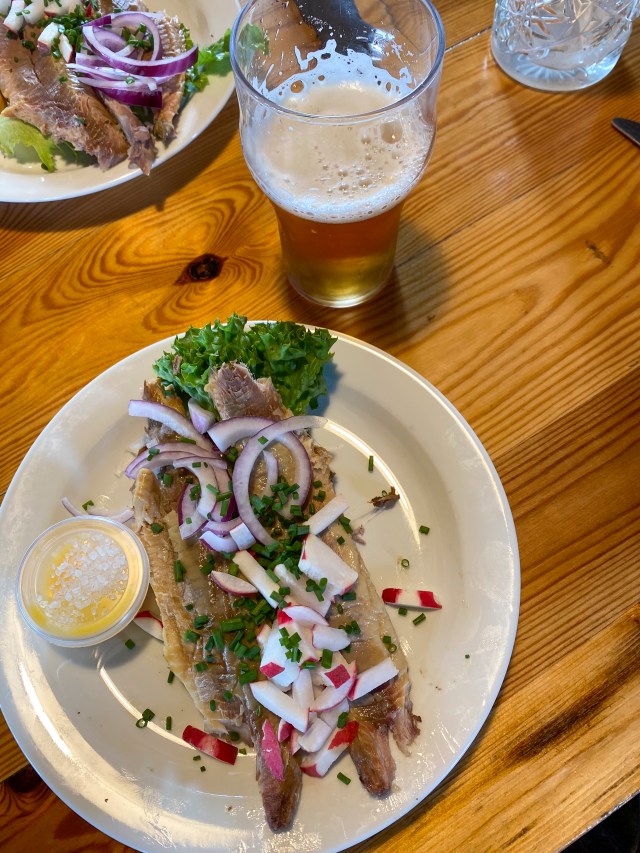
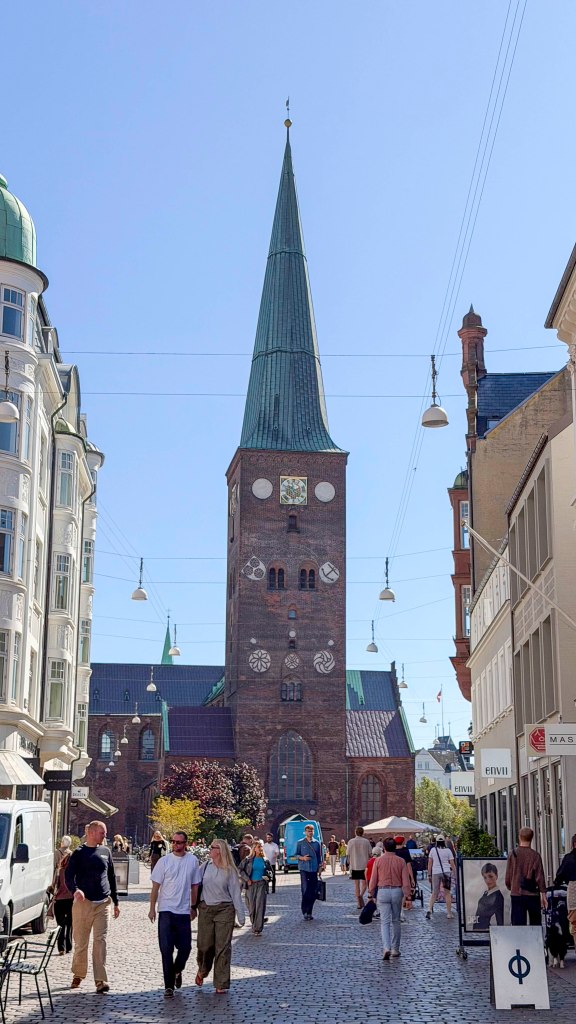
Many cruises utilize the Copenhagen port in any cruise of northern Europe or the Baltics. So, if one finds this a repeat stop and not fond of the Copenhagen crowds, hop on a train, head west about 30 minutes and visit the cute little town of Roskilde. It is a charming, quiet location with two fabulous sights – its twin spired cathedral and the nation’s best Viking Ship Museum. From the train station head to the twin spires and along the way you’ll find a pedestrian street with several bustling cafes. If it is lunch time – as it was for these hungry travelers – stop at any one of these and have some regional fare with great views.

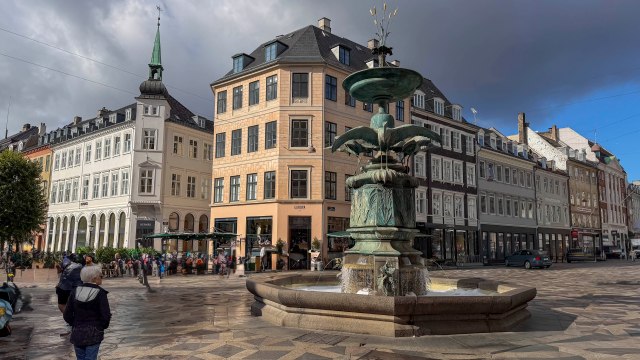
Quickly found a lovely spot for lunch on the plaza.

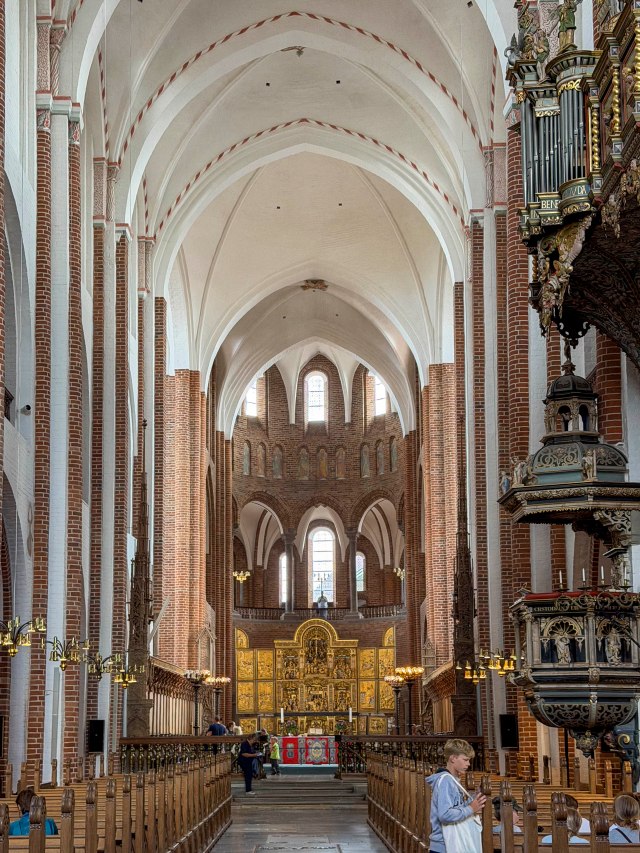
Once ready to move on, head for those twin spires again. The original church built on the same spot was built in the early 1000’s. The current Gothic cathedral was built in the 1200’s and was catholic until the Reformation in 1536 when Christian III forbad the catholic church and it became Lutheran with the King as its head (ala England and Henry VIII)! This cathedral is Denmark’s Westminster Abbey as 40 kings and queens are thought to rest here with 37 known with certainty. They are ensconced in royal marble, alabaster and draperies of every ornate description. Altogether, there are more than 1000 graves in the church, many so worn no identifying marks can be seen. The paintings, frescos and statuary are something to be seen.

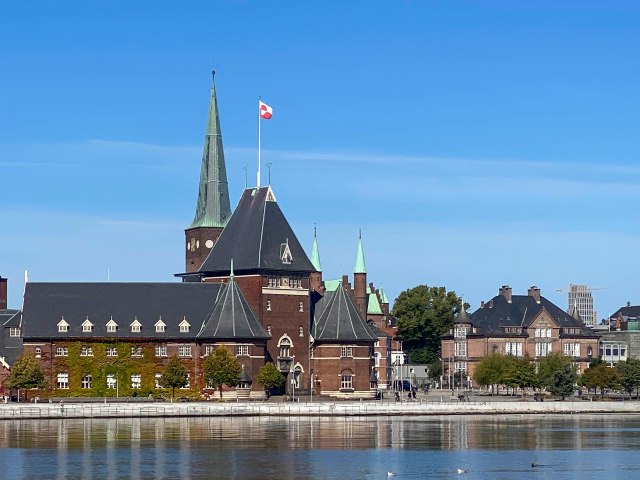
A small portion of the cathedral complex.
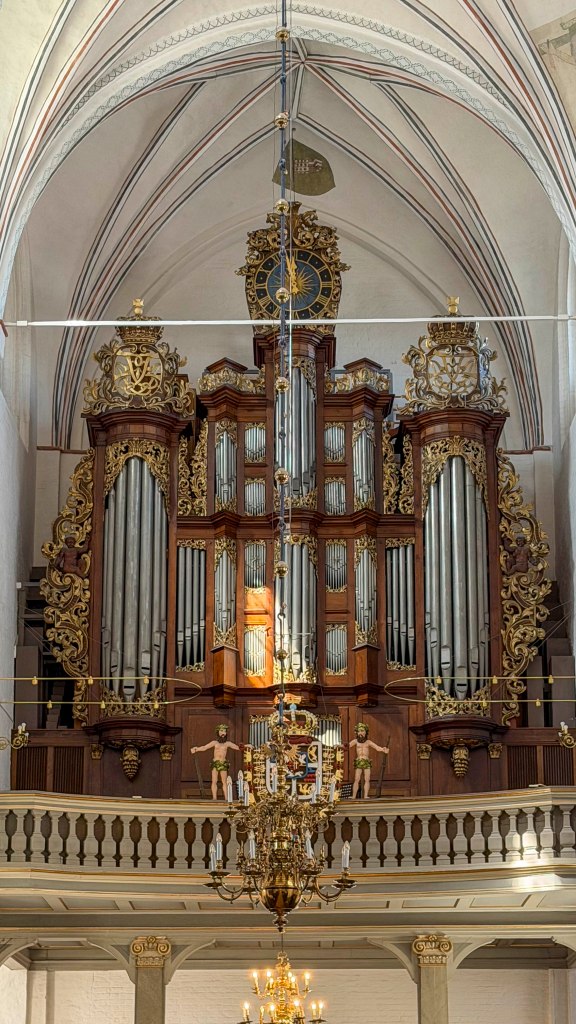
The baroque organ, circa 1654, has been rebuilt and restored on several occasions, most recently 1988-91.
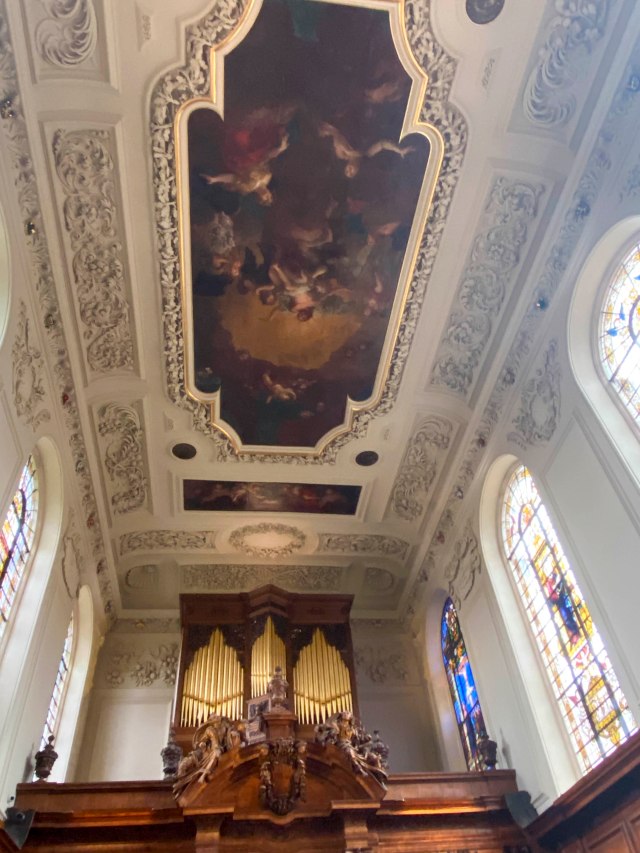
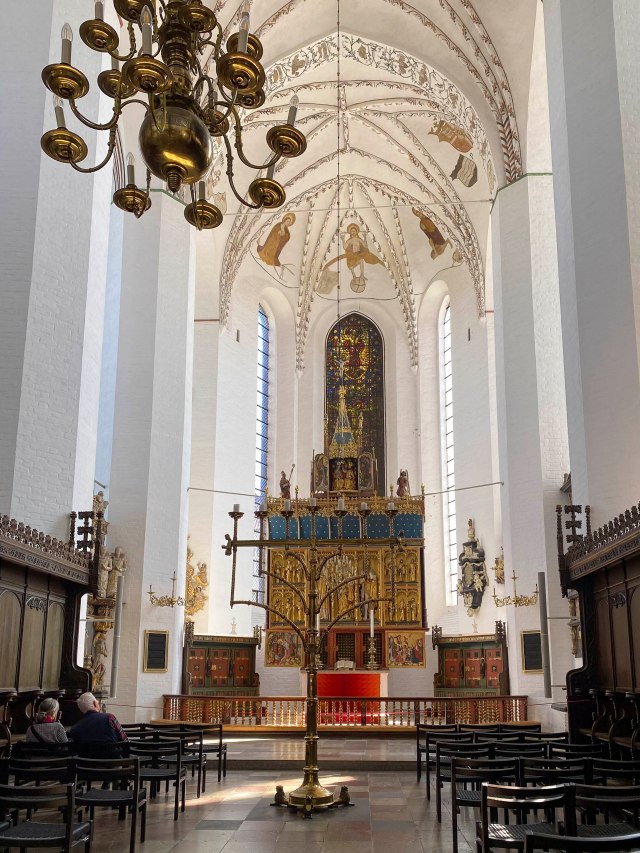
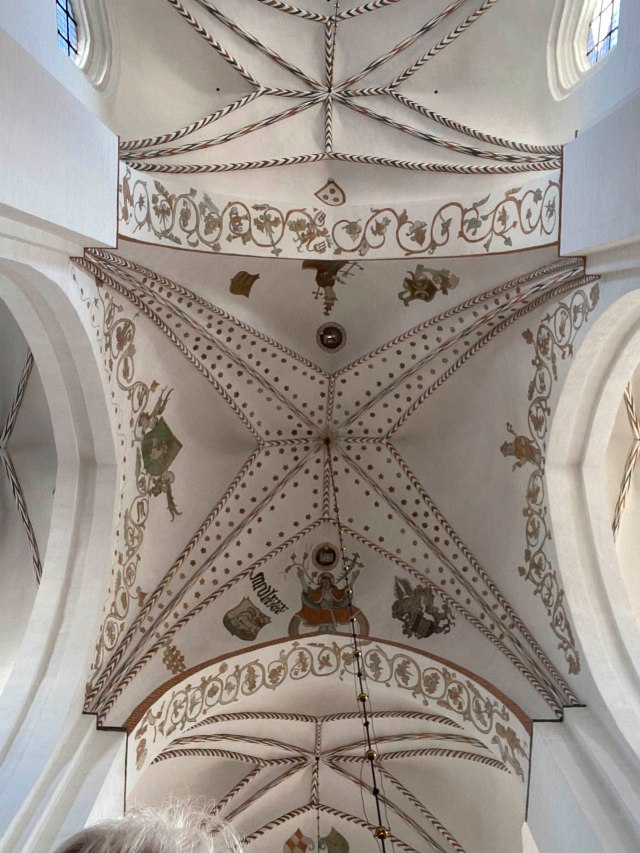
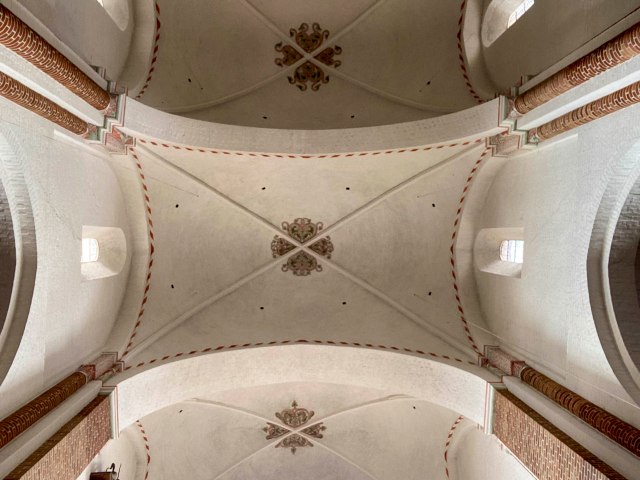
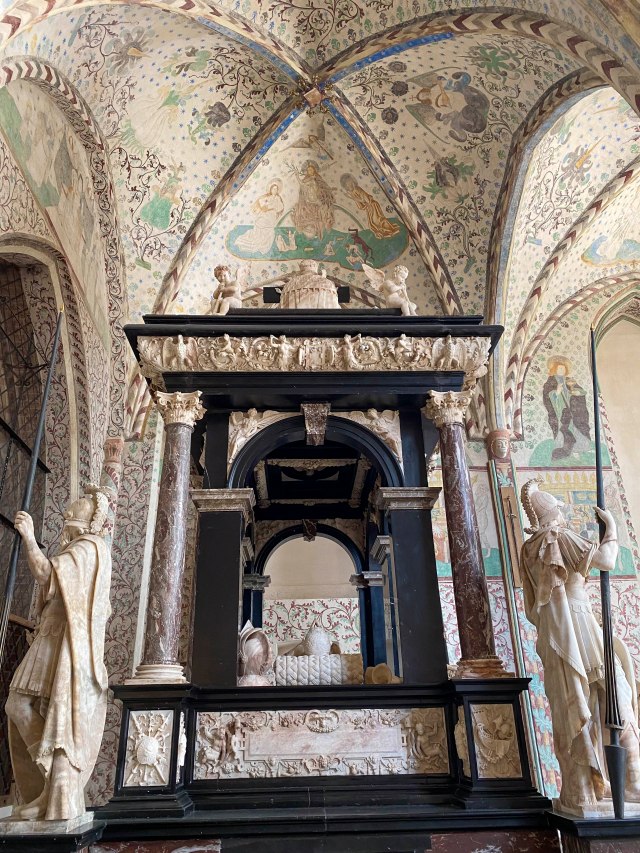
The art on the ceilings is beautiful.
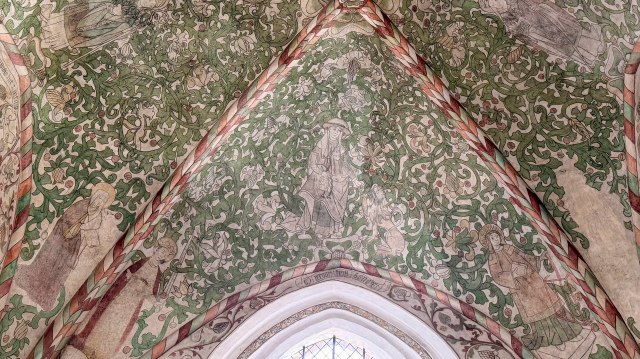
Incredible frescos everywhere.

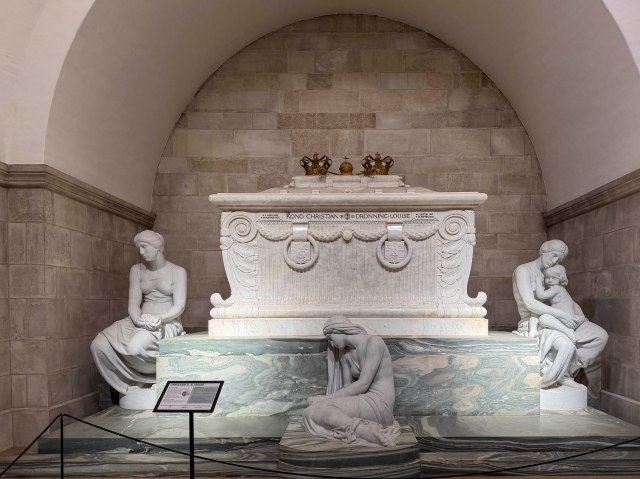
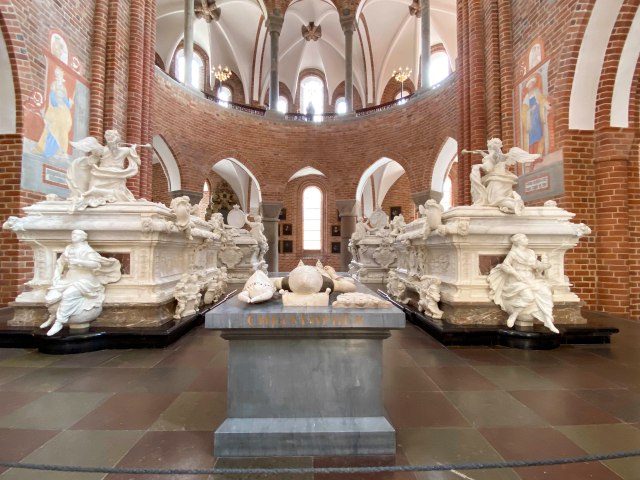
And then the elaborate tombs – – –

Christian IX and Queen Luise’s sarcophagus. The female figures are known as the Little Mermaid’s sisters, as the same sculptor made all three with his wife posing for all.
Frederick IV and Queen Louise with the Duke of Lolland in the foreground.
The Chapel of the Three Kings.

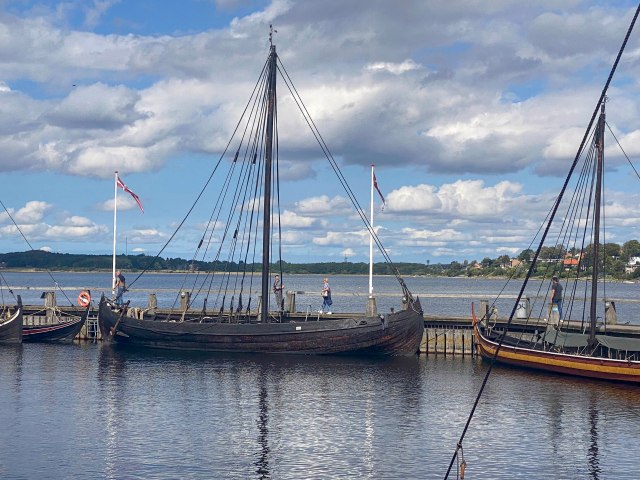
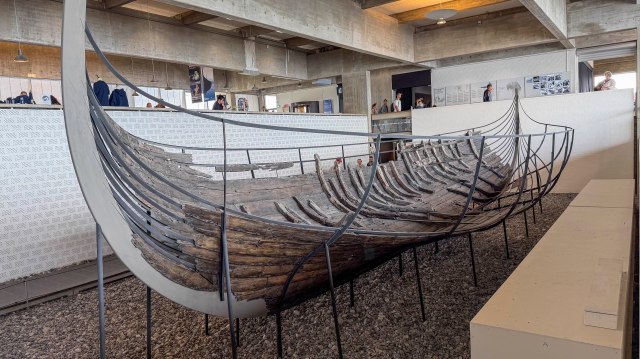
When totally overwhelmed with the cathedral sights, continue the walk down a lovely treed lane past a park and part of the university grounds to Vikingeskibsmuseet Roskilde, the Viking Ship Museum. This is not one building but several with a workshop, where they are building replicas of the Viking ships, a shipbuilding area for guests, a boatyard with replicas of the rebuilt ships and a building housing the remains of five Viking longships found at the bottom of the fjord. These five longships date from approximately 1000 AD (according to tree ring dating of the wood utilized in the hulls) and are thought to have been sunk intentionally to prevent enemy ships from entering the harbor. While these five were rebuilt in 1957, they are the subjects of current rebuilds with greater accuracy based on involving craftsmen and seamen and includes the reconstruction of full-scale ships and their testing under realistic conditions.

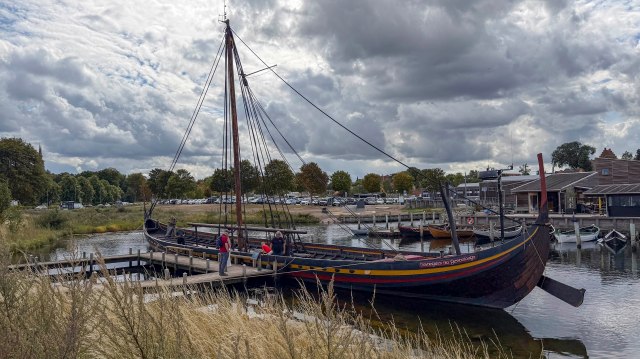
Small harbor containing some of the replications of Viking ships.

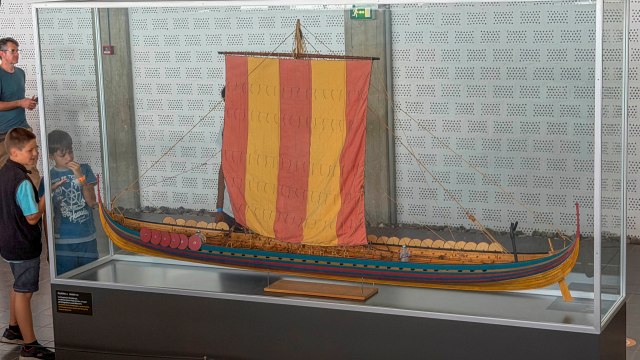
The first step in the reconstruction is to create a 1:10 ratio of a wooden model based on a cardboard model. This wooden model reflects the possible appearance of the original ship when new and forms the starting point for the full-scale reconstruction of the ship.

A 1/10th scale replica of…
…this ship…

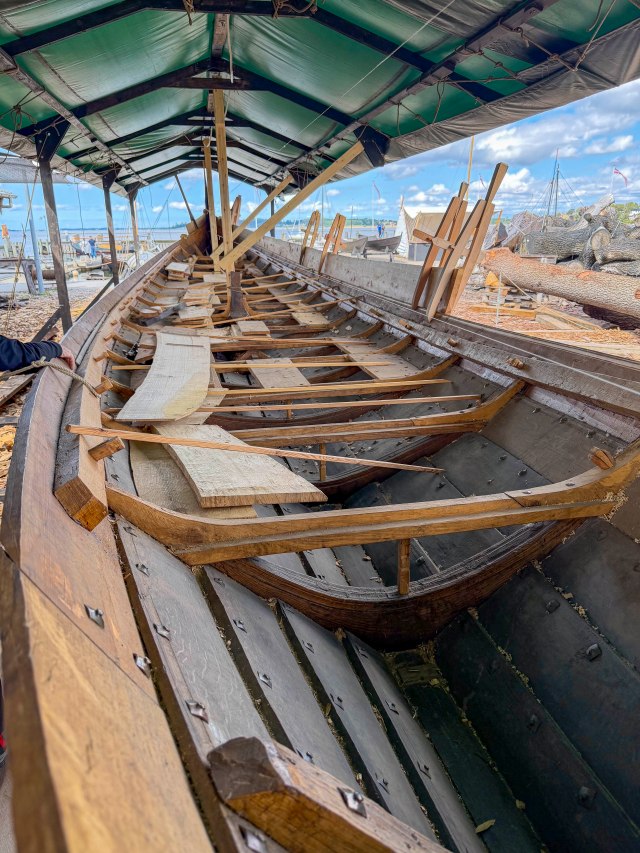
Several details in the reconstruction are adapted to fit this ship based on various depictions from the Viking Age to the extent they can not be specifically determined from the information derived from the remains of the ship. With all of this information, skilled craftsmen begin the process of recreating just as the Vikings would have completed their construction. This is done in the workshop.

…which is currently being replicated in the boat works…

After all this work you wind up with something like this – –

…and a 1991 replication of the same boat.
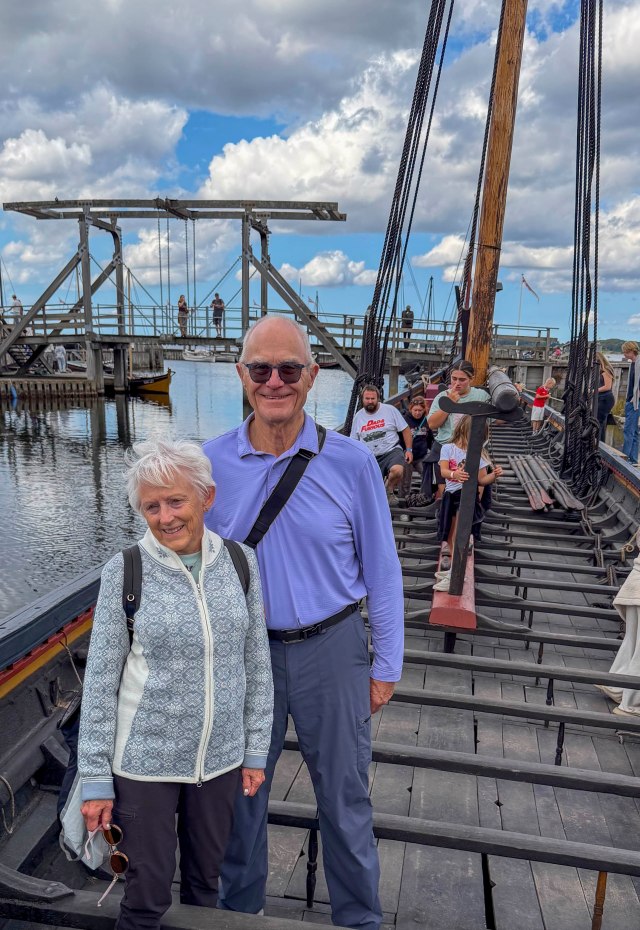
On board the 1991 replica.

If one has a little extra time back in Copenhagen, early in the morning before the crowds hit, a stroll and a coffee in the pedestrian section can be quite nice.

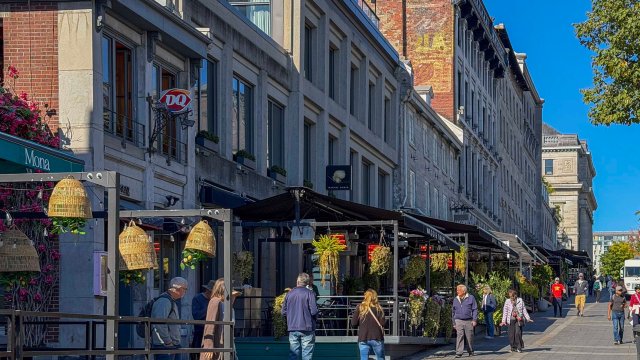
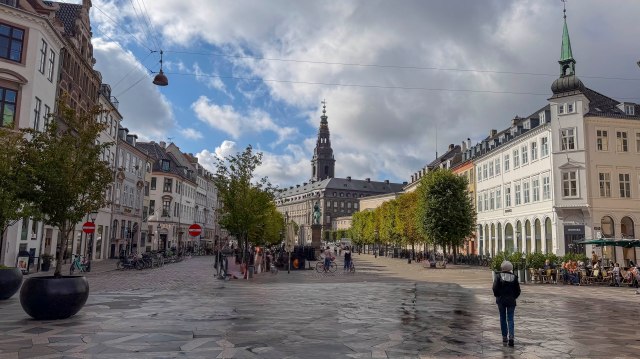
Our morning walk along the Stroget shopping area…
…took us to the very nice cafe on the right with lovely sights.
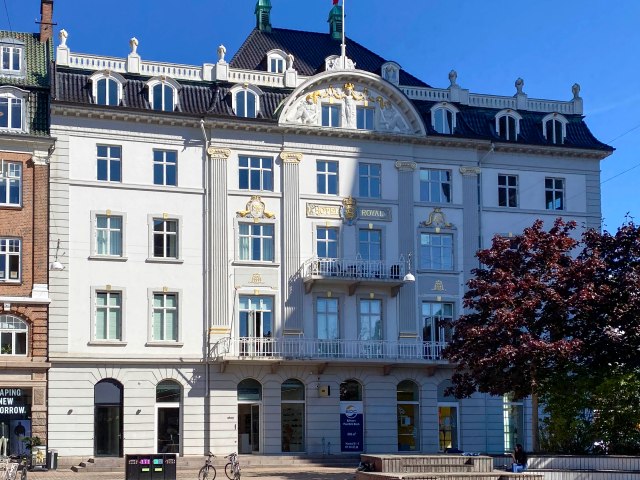
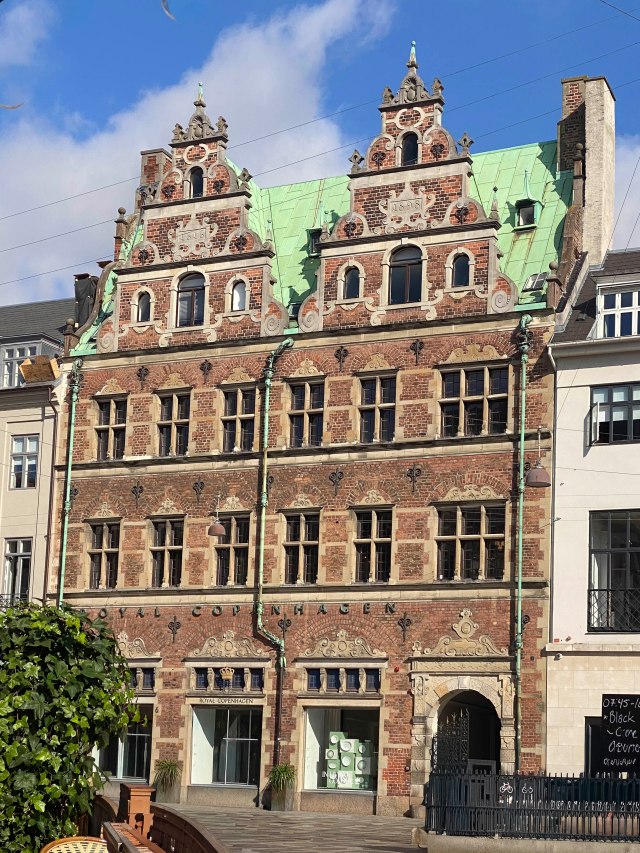
Royal Copenhagen moved its flagship shop into this building in 1911, where it has remained.

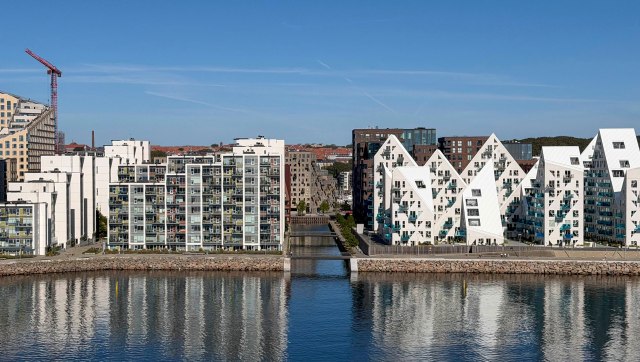
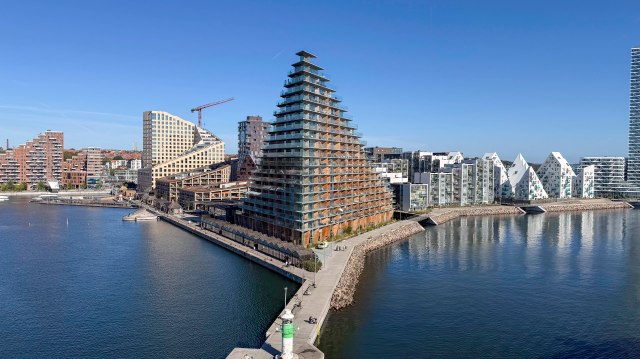
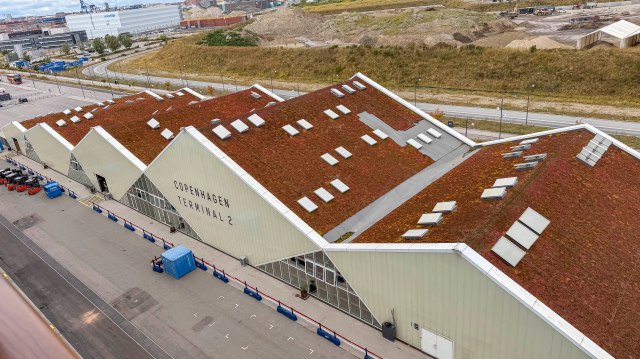
In the category of odd notations yet again – interesting sights are seen from the ship. Copenhagen is revitalizing the entire port area with apartments, condos and office buildings. It seems that they are really looking to the future with concerns of ecology since many of the buildings have plant/sod roofs! Interesting look – but who else sees them than cruisers on higher decks of the ships?!?

Do these have to be watered or mowed?

This stop in Copenhagen provided the opportunity to check out something off the beaten path – Roskilde and all it has to offer. It is highly recommended for anyone in the neighborhood looking for an escape from the crowds. Enjoy.

E & G – enjoying every minute;-)


Kristiansand, Norway

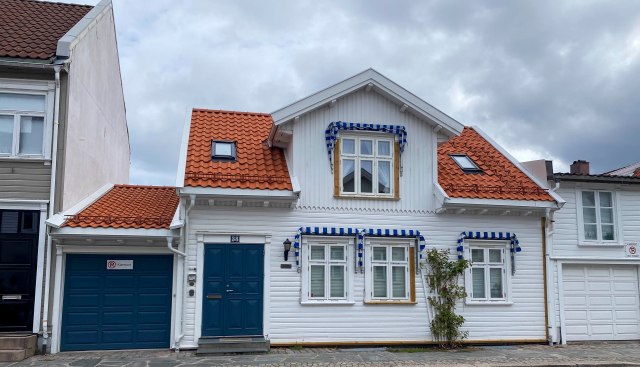
What a lovely little town. One would never know the area has been settled since 400 AD! King Christian IV formally founded the town in 1641 – thus the name. Because of location, it was useful for defense which allowed it to grow into a major port. Today, the town is redeveloping the port area into a walkable ‘seaport village’ to attract all those cruise ships to help the economy. Just hope it doesn’t lose its charm. 

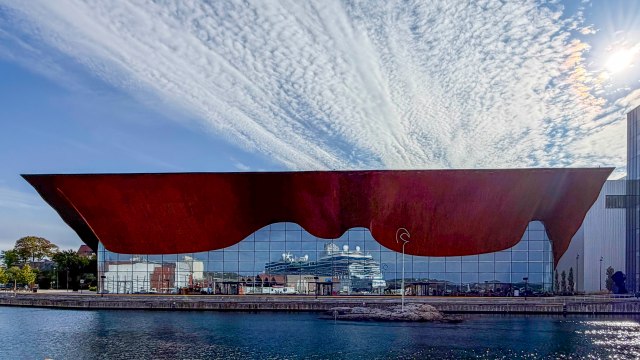
The Kristiansand Performing Arts Center welcomes cruise ship passengers.

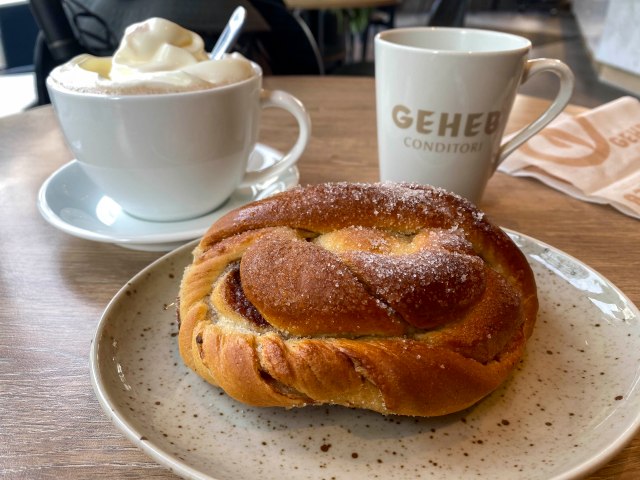
The ‘must sees’ in Kristiansand include the un-congested pedestrian street of lovely cafes and shops, Posebyen (the old town with its white wood houses), the cathedral at the city center and the Fiskebrygga (fish market). ALL walkable from the cruise dock. So – off we go. First stop is one of those lovely little cafes on the pedestrian street. This is Norway’s version of Starbucks and a repeat of a similar pic you might remember from the Alesund post. That is because they have the BEST hot chocolate and this wonderful cinnamon roll – not too sweet with just the right amount of cinnamon;-)
Ahh – what a great way to start the morning!

After that great nourishment, continue down the pedestrian way and be amazed and the sights – –

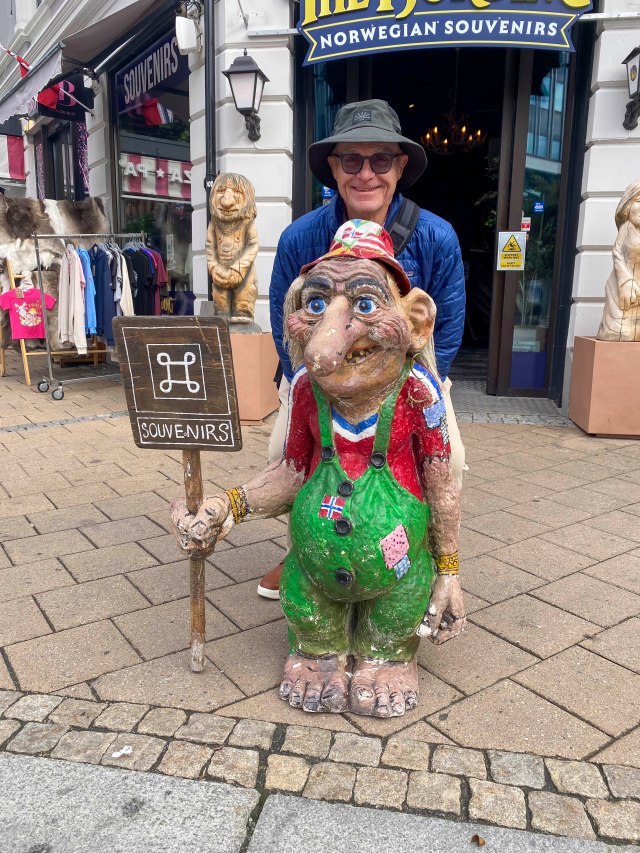
Family resemblance?
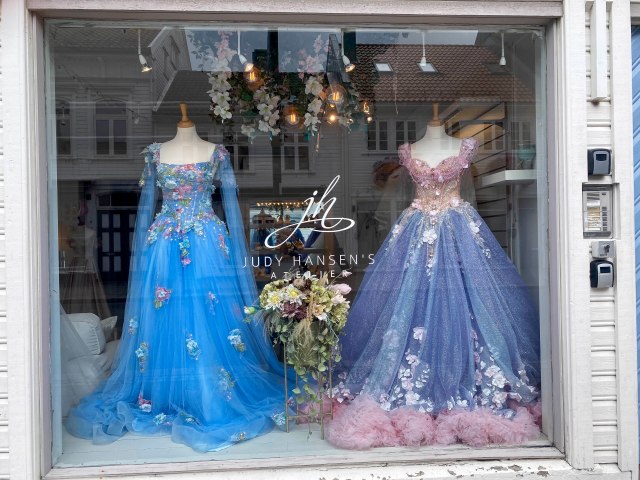
Cinderella must be getting ready for the ball.
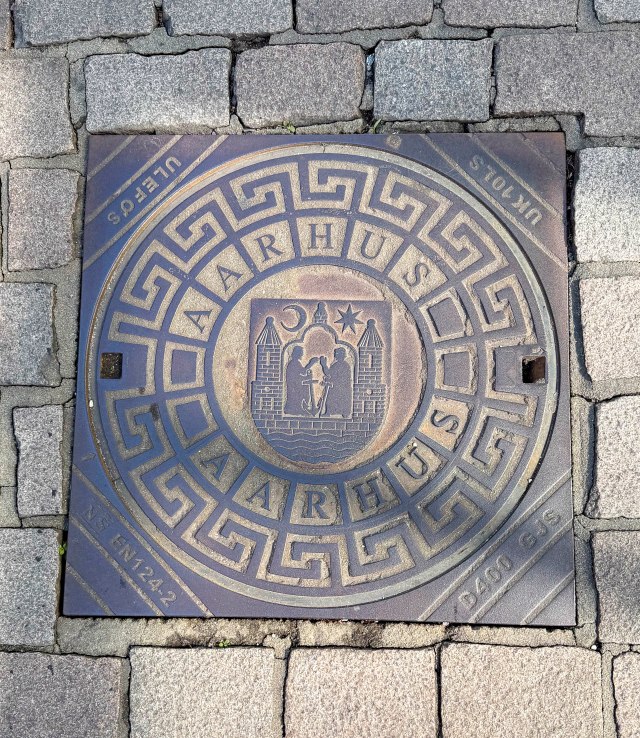
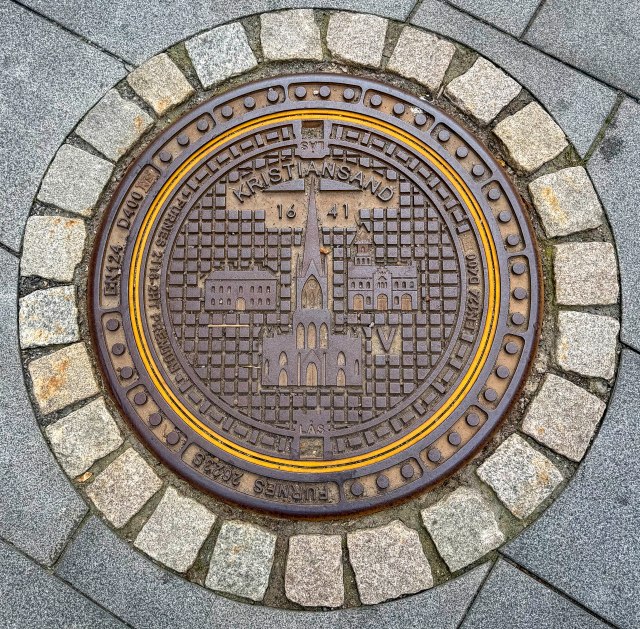
Even the City’s manhole covers are interesting – depicting the central square.

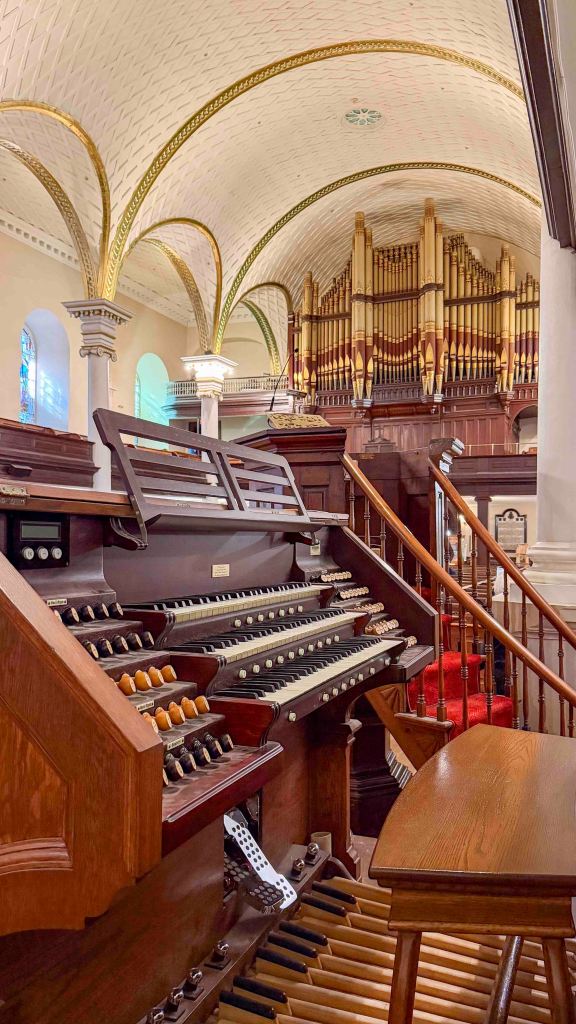
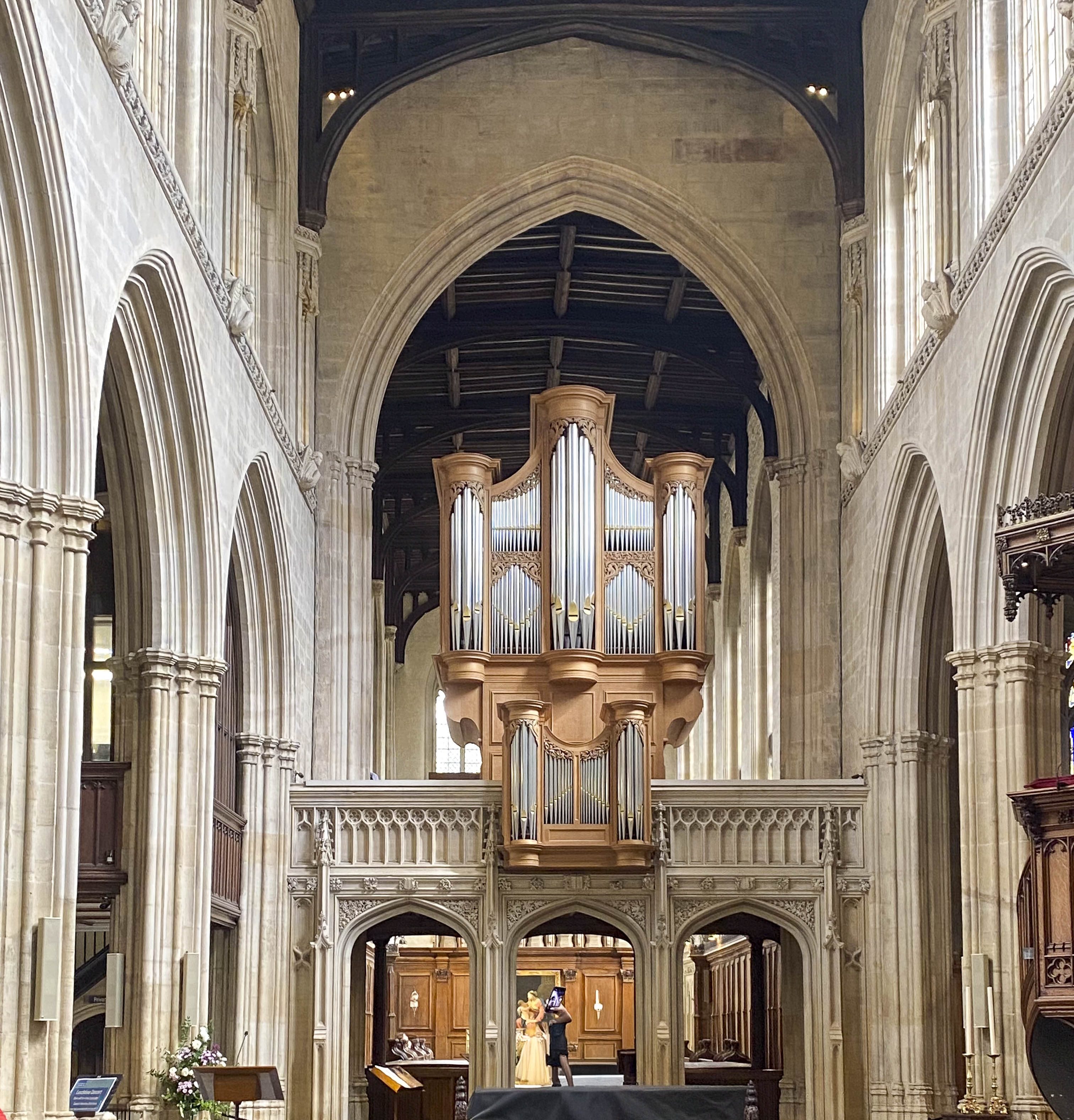
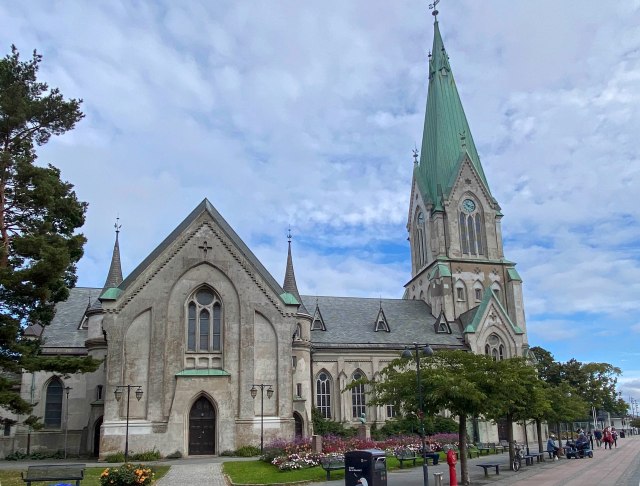
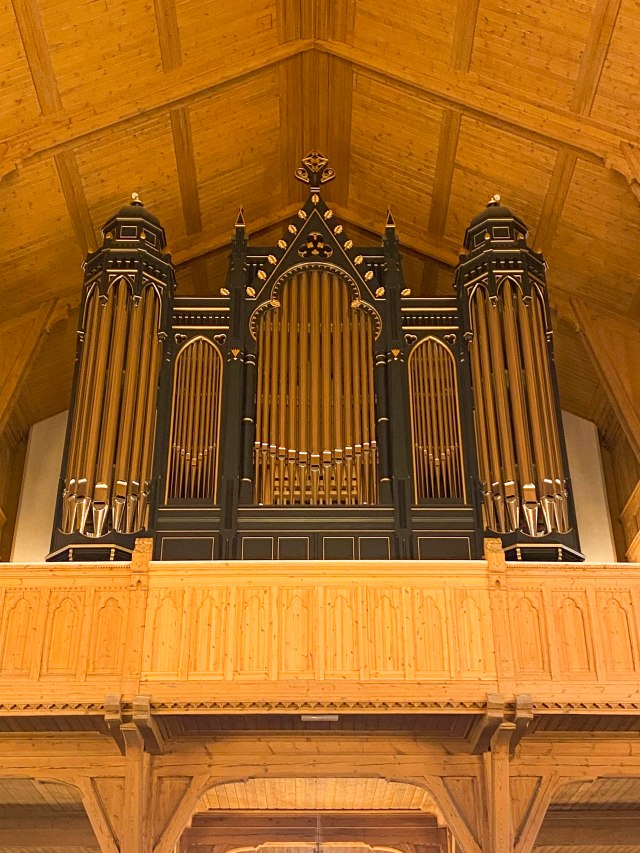
As one can see, the centerpiece of the central square is the Cathedral with its elegant simplicity. This Neo-Gothic cathedral built in 1884 contains beautiful wood ceilings and along with wood framed organ pipes. AND – they were having an organ recital within minutes to provide a great respite with outstanding music. The organist was fabulous and very informative introducing each piece played and discussing the fiber optic connectivity of the organ to the pipes, which allowed the console to be in the middle of the floor. What a treat!

Kristiansand Cathedral.
Ready for the recital.
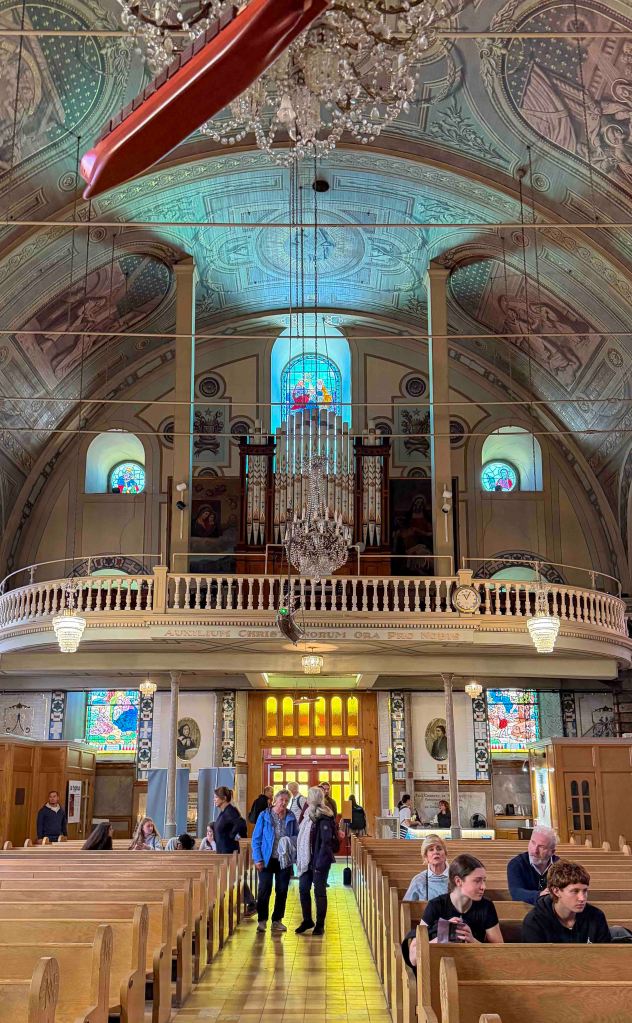
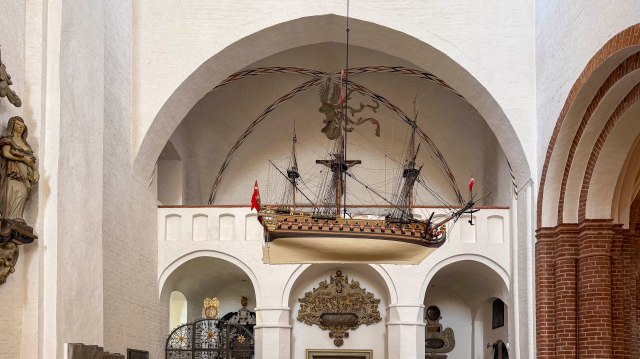
The model ship hanging in the Cathedral is a model of the Danish steam frigate Jylland, and it commemorates the Danish sailors who died following a major naval battle in 1864. 
Spectacular organ pipes in the balcony.
Let’s go.

Energized from the beautiful concert, it was time for a brisk two block walk to Old Town with all its white, wood houses lined up side by side. This old town is one of Northern Europe’s largest collections of charming timber houses. Interesting – but a bit monotonous – until you find a few cute little places with a little color or a few plants outside.

One of many charming houses in the downtown area.

Now – a little diversion you might find odd. But, a very interesting discovery in this old part of town. The garbage system! As one looks up and down the street, there are NO apparent garbage cans or those large ugly bins that are always overflowing;;-( That’s because they have this unique system of vertical ‘bins’ in the ground that housing units are assigned to and must have a key fob to gain access. Never know what one might find when wandering these little towns.

Novel neighborhood trash cans that look small – right?!?
Well – they are huge under ground containers lifted out to dump into trash trucks.

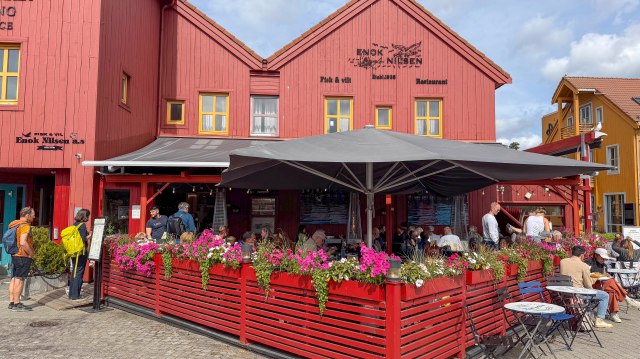
All of these discoveries may have created an appetite. So, off to the Fiskebrygga (fish market) for the best fish and chips you’ll ever have!

Visited the portside fish market…
…and enjoyed best ever fish & chips for lunch.

The town of Kristiansand might be small but it is mighty when it comes to hospitality. Come and enjoy;-)
E & G – quite happy with our day full of surprises!

Searching for Nessie

There is a 60-million year old fault line in Northern Scotland that contains a beautiful glacier-gouged lake – the famed Loch Ness;-) Measuring 24 miles long and 755 feet deep, it is one of the largest ‘lochs’ in Scotland AND more importantly, home to Nessie! So – off to spot her.
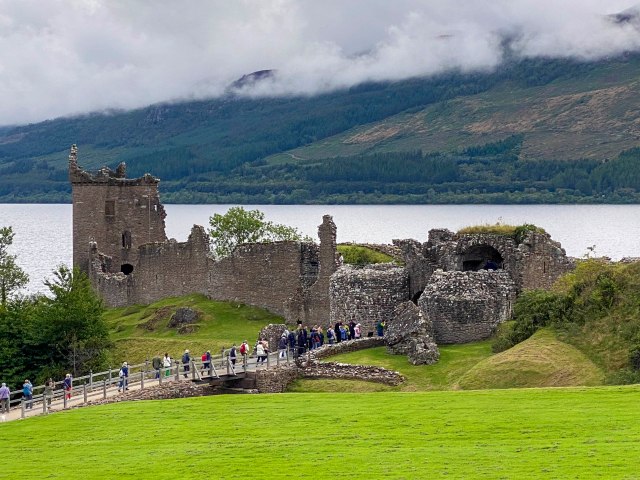
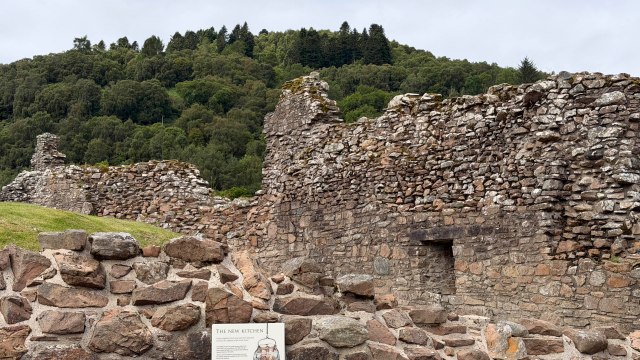
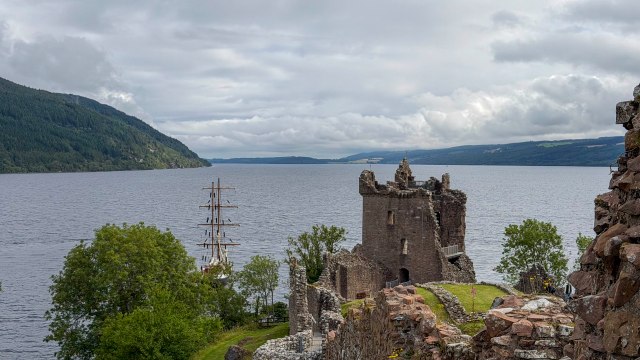
The 1,500 year old Urquhart Castle ruins is a good place to search from as it sits atop a small promontory with great views of the lake. This unfortunate property passed from Scottish hands to the English and back again many times. Locals plundered the castle for building materials during its lifetime and wooden portions rotted away leaving little for historians to piece together to attain its history and usage. Between 1912 and 1922, after the castle passed into State care, it was tidied up, unintentionally removing important clues to its past.

Cross the bridge, where a drawbridge once stood, and explore the castle.

It has been determined that the Grant Tower, which housed the Grant family, was built some time after King James IV gave Urquhart to John Grant in 1509. The property was rewarded to Grant for his support of the monarch in his struggle against the MacDonald Lords of the Isles. Climb as high as you like for wonderful views of the loch – and perhaps a sighting of Nessie;-)
This tower housed the family in earlier years.
Reconstructed portions of the castle.
The view from the Citadel, where ancient walls repulsed attackers.

Sadly, there was no spotting of Nessie. Perhaps there was not enough of that prevalent Scotch Whisky taken in to aide in the spotting;-) So, she was safely hidden for another time.

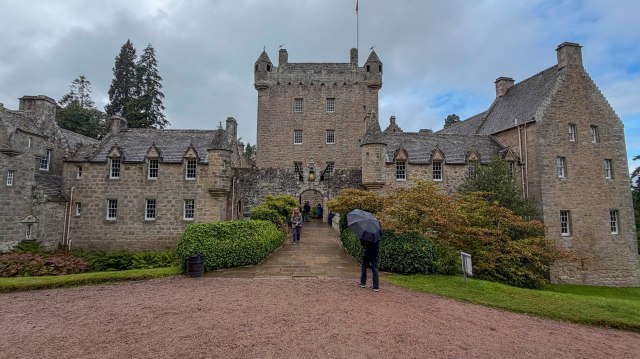
Not too far down the road was another castle. This one in much better condition although it was originally constructed over 600 years ago and is still home to the latest of 23 generations of the Cawdor family – Cawdor Castle. The rectangular tower-house (the original portion of the castle) consisted of four stories and a garret with only one entrance to the outside. It was built around a holly tree (still in the basement – now petrified – and has been dated to 1372) and had a secret dungeon only recently discovered!

Cawdor Castle – a perfect picture of that center tower-house.
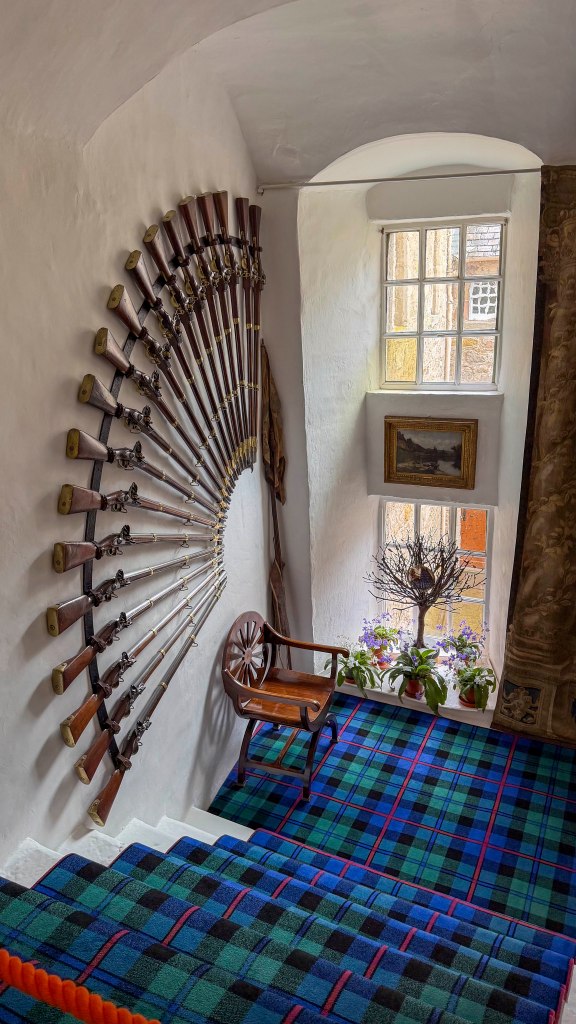
Nicely maintained displays.
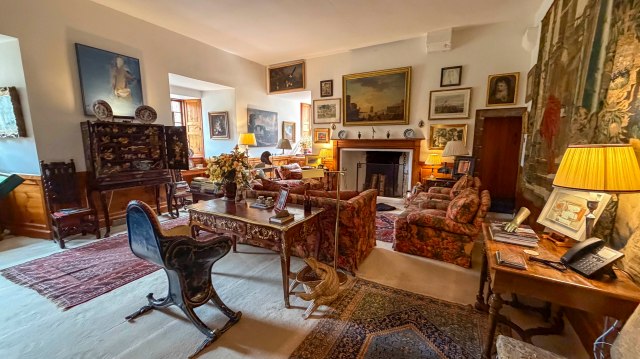
This living room is a mix of styles and historical artifacts.

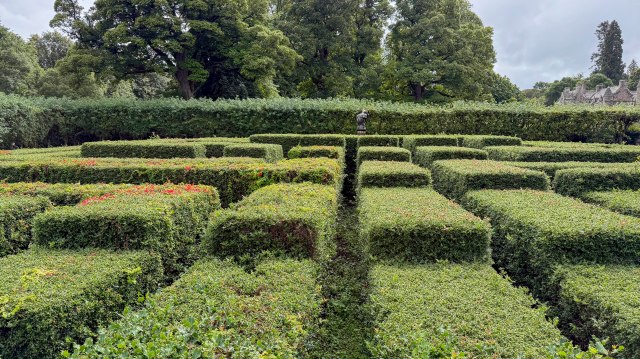
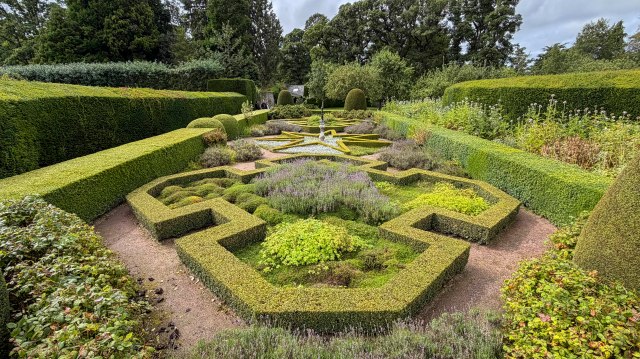
The Gardens of the Cawdor Castle are quite special. The Walled Garden is the original kitchen garden and the oldest at Cawdor. It was remodeled in 1981 by the current owner, the Dowager Countess of Cawdor, and contains Symbolic gardens and a sculpted maze containing over 1200 holly plants.

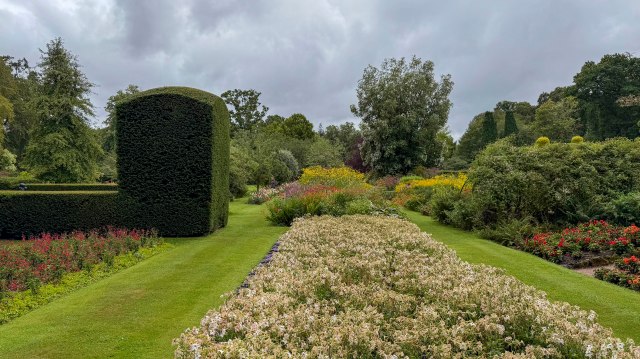
The formal gardens are elegantly maintained.
A great example of the Symbolic garden.

The Flower Garden was laid out around 1710 – most likely influenced by travels to Poitiers, Blois and Paris, France.

While it is time to leave the beauty and myths associated with Northern Scotland behind, it would be remiss not to mention the major influences that the Vikings had on the entire northern region, including the UK and Iceland. They ruled many of the sea lanes around the northern isles and were responsible for establishing and settling ports that developed into many of the villages, towns and cities visited on this cruise. They also contributed to the language and verbiage used by many of the countries visited. These prior two sentences condense down the hundreds of years of Viking influence. Every tour taken during the past couple of weeks mentioned the Viking influence in the area. Raiders or settlers they had profound effects on the world they left behind.

Now it is time to leave Northern Scotland and all its beauty behind. Perhaps we’ll be back another day – to complete that NC-500;-)
E & G – Loved Scotland and all its GREEN


Unbelievable Scottish Highlands


 A taste of the Scottish Highlands through visits to quaint little towns like Ullapool and Scrabster will quickly put this region on a bucket list for further adventures and exploration! Especially a drive on the North Coast 500 (NC500), which is a 516 mile scenic route looping around the north of Scotland from Inverness – probably with a slight diversion to investigate the Hebrides with its Isle of Skye;-) The scenery from our little sampling is stunning, the people are incredible friendly and the fish and chips (with the fish straight out of the water) are the best! So – here is a sample.

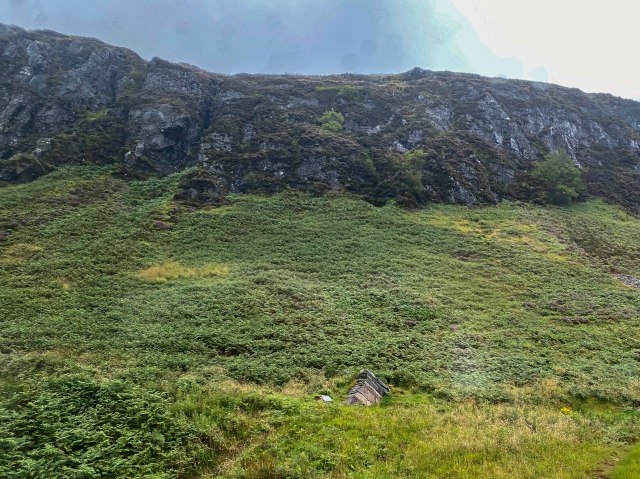
Ullapool is a wonderful little town with incredibly large significance. Just 30 minutes out of town is the Knockan Crag National Nature Reserve, with enormous geological significance. The low cliff of Knockan exposes rocks that set the scientific world ablaze in the 19th century as it proved prior thought wrong. The Moine Thrust was created by the force of two continents crashing together many millions of years ago causing old lower layers of the earth to rise up vertically and fall back on top of the newer layers of earth. Thus upending the previous theory that the oldest layers of earth were always on the bottom of any layers with newer periods of earth on top. It was only because of the exposed rock in this area that this was able to be determined. Unfortunately, the weather did not cooperate this particular day for a hike to the top of the crag, but the substitute hike was a good one.

Good morning Ullapool.
The Knockan Crag with much older ‘earth’ on upper layers.

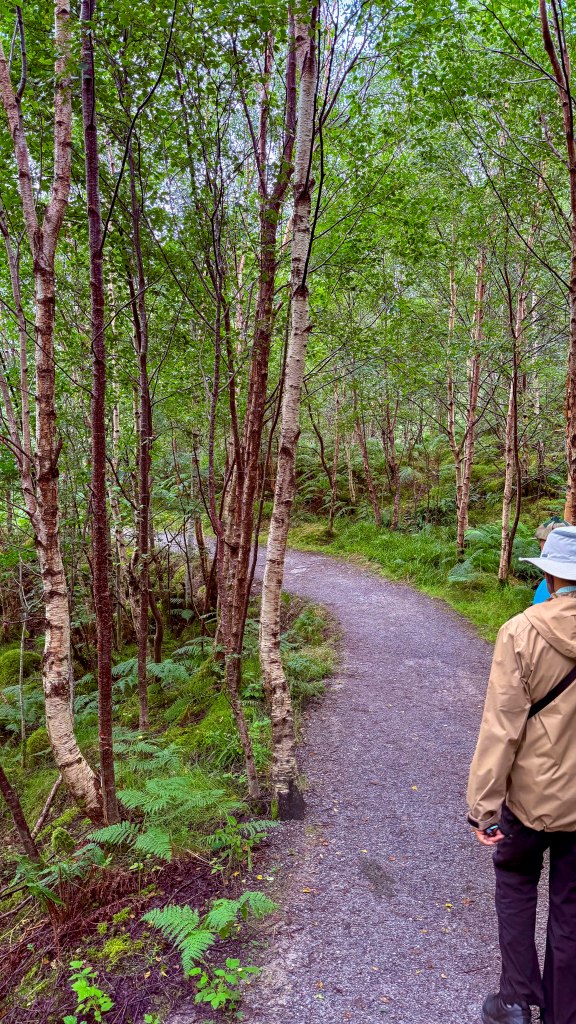
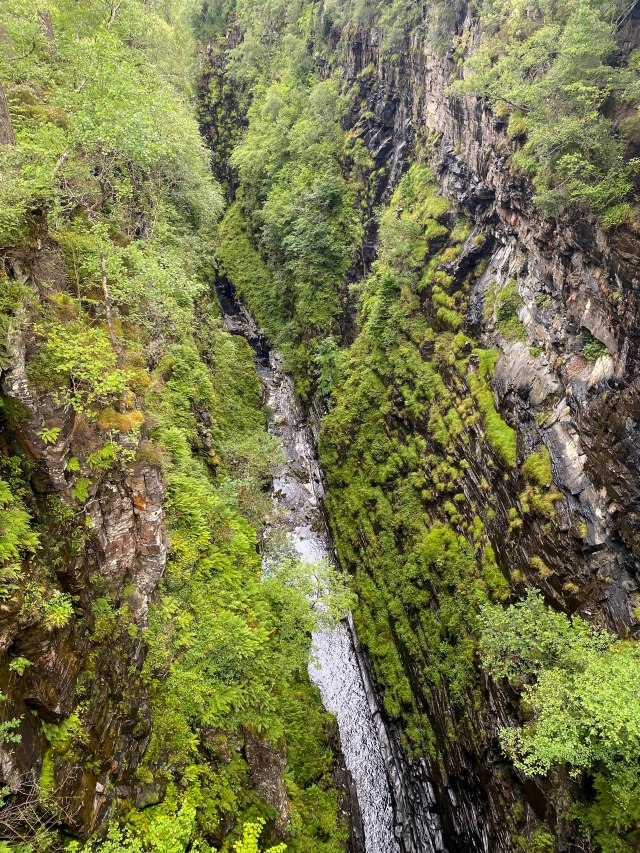
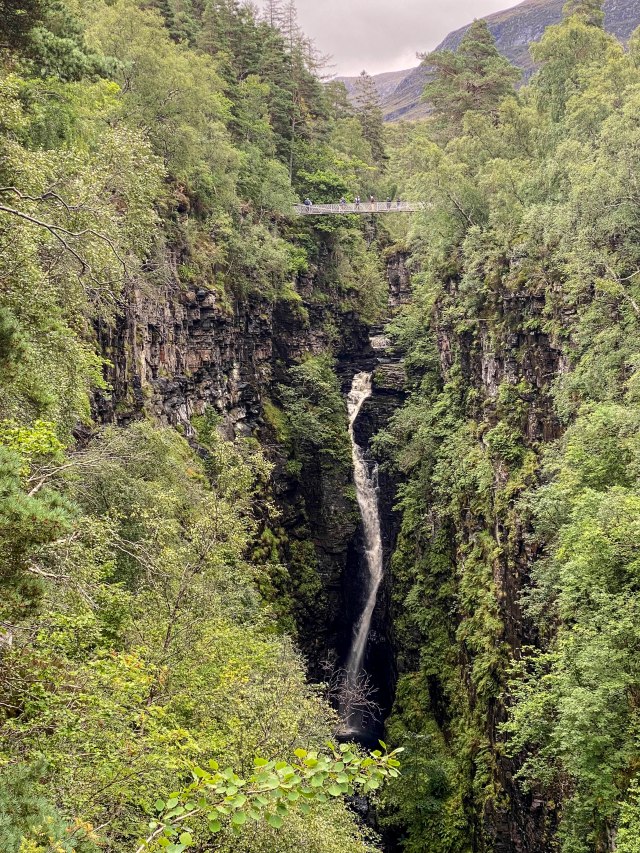
Off to Corrieshalloch Gorge — a hike not to miss. One can take a myriad of trails to discover the gorge winding up at a Victorian suspension bridge that transports you over the 200′ drop to the River Droma. Further on a cantilevered viewing platform provides great pictures of the falls and the suspension bridge. Exposed rock here contributes to the Moine Thrust theory. Enjoy the walk, the greenery and the peace.

Beautiful trail in the Corrieshalloch Gorge.
Looking down from the suspension foot bridge – its a loooong way down!
YES – that’s the bridge and a beautiful waterfall.

After all this exhilaration, it was time to head back to town and have some delicious fish and chips. Where else – Chipy’s!

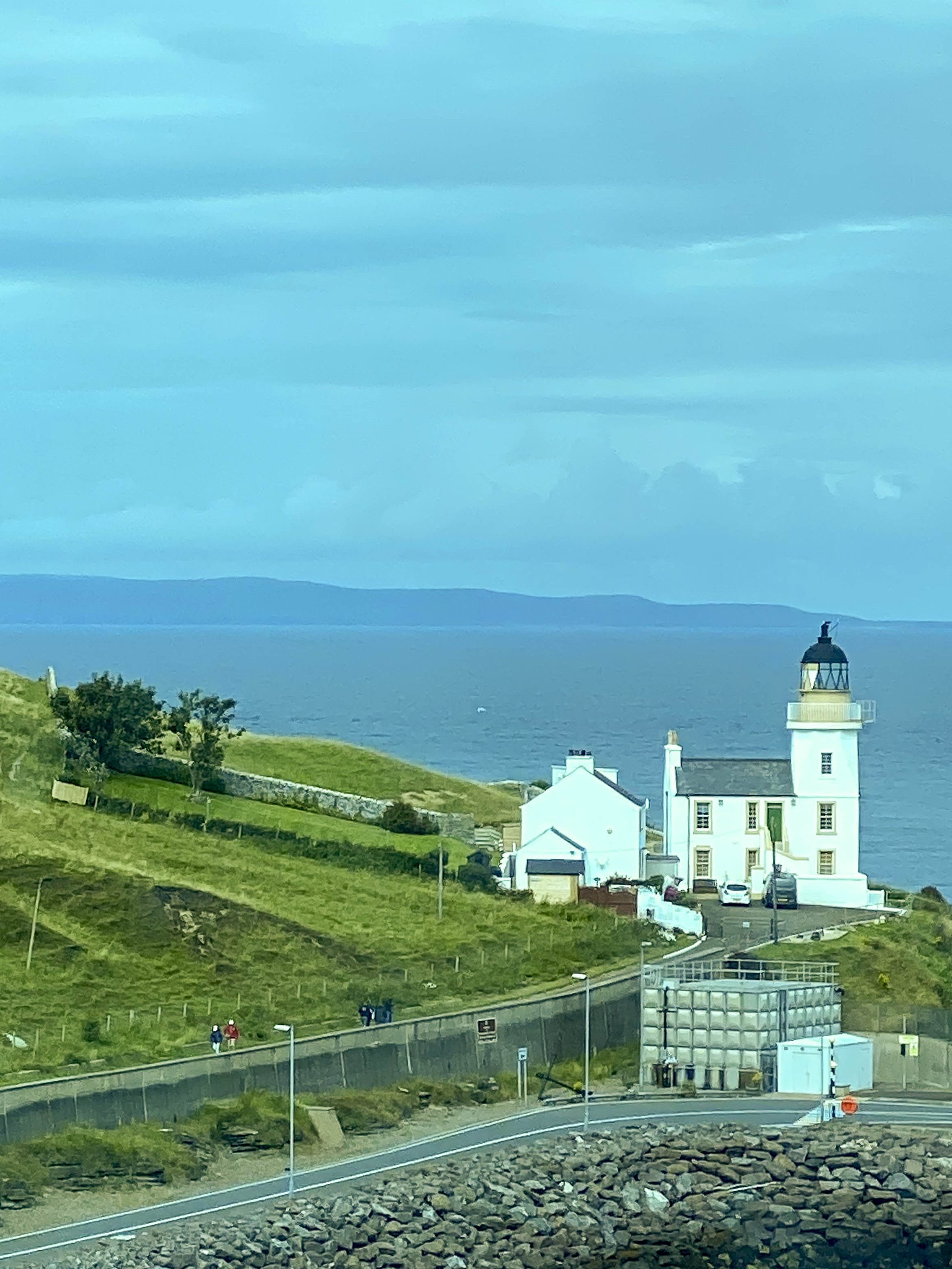
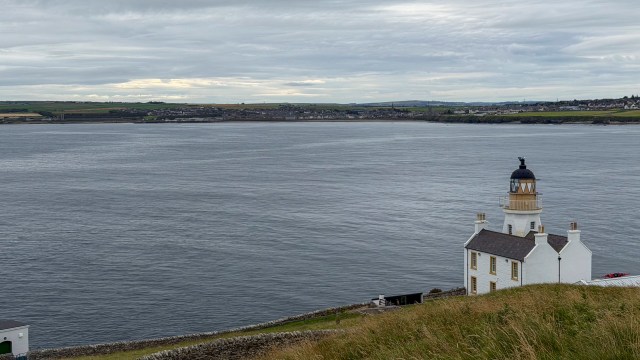
How could Scrabster possibly top Ullapool? Well – just pass the lighthouse at the edge of town, go through the gate to the sheep pasture and follow the trail. You will have the best 1.5 mile walk with sights you wouldn’t imagine. The pictures will tell the tale.

Turn left just before the lighthouse.
Passing the light house on a damp morning hike in Scrabster.
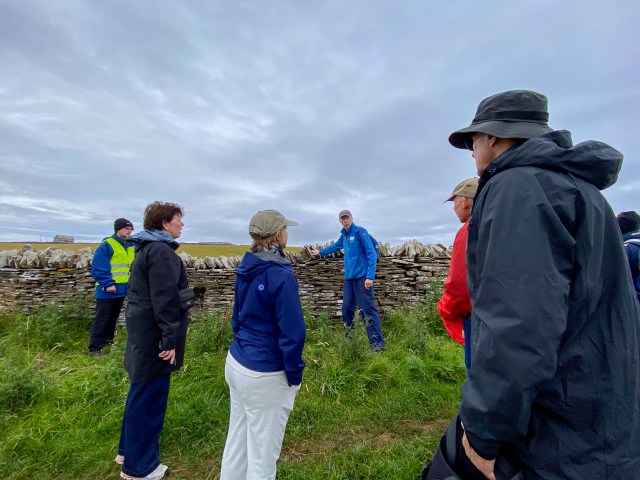
Very knowledgeable guide, John, led the way.
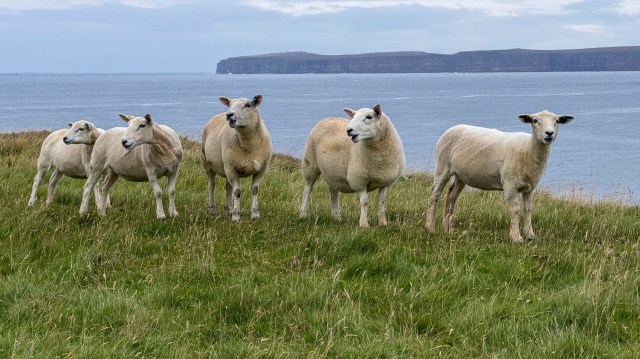
A choir of sheep. Dunnet Head, the point of land in the distance, is the northern most tip of the Scottish mainland.
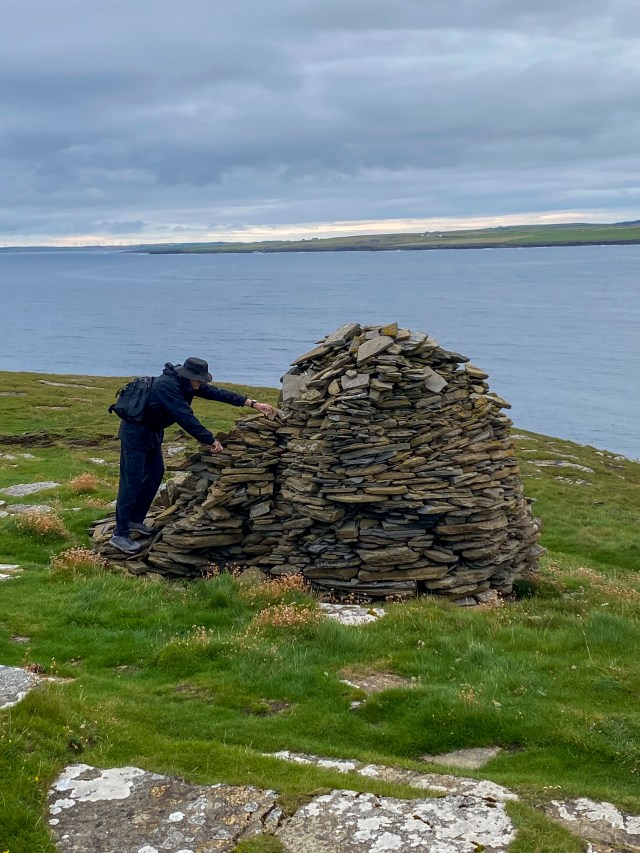
A shale cairn created by hikers – everyone must add a piece.
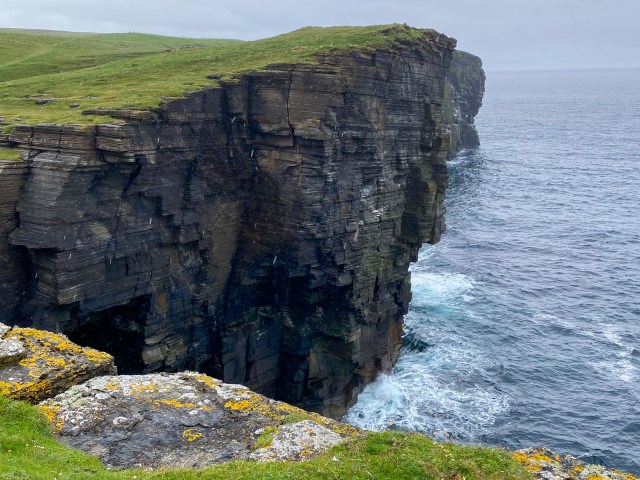
These sheer cliffs fall into the North Sea.
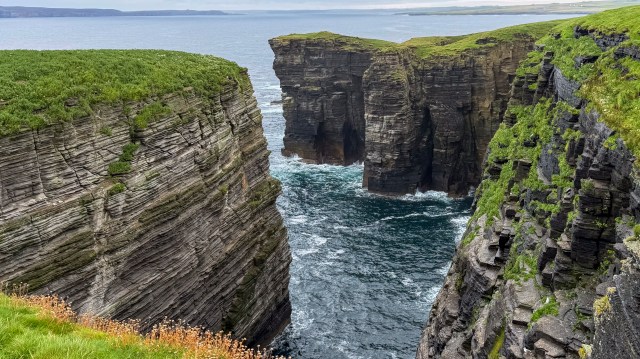
The sea over time will erode the shale creating ‘windows’ – – –
Until the shale stands alone forming a ‘stack’.
Spectacular views.

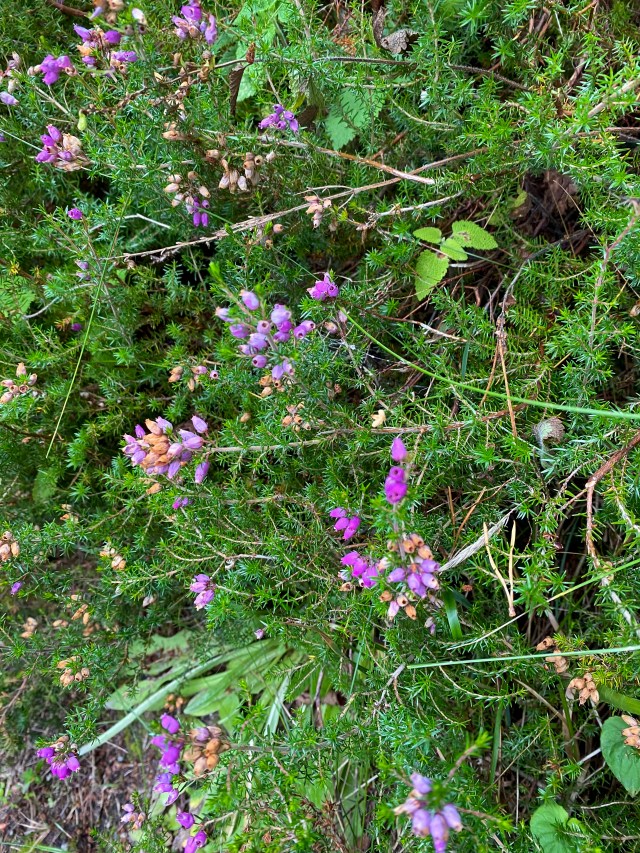
The green, the sheer rock cliffs, the pounding sea and all the little white specks in the green pastures (the sheep) make this area of the world so inviting. One last item – the heather, which is in bloom.

An ode to daughter;-)

How fun were these last two days. Incredible scenery, friendly people and very knowledgeable guides. Even though Donald made us sing ‘Old McDonald Had a Farm’ on the Gorge hike;-)

E & G – totally enthralled with the Scottish Highlands


Isle of Man

Can you believe this was our stop?!? Of course we had to tender as the dock just wasn’t big enough for the ship! By the time all 1200 passengers were on the island it was really crowded and it seemed like the whole island might sink.

The Tower of Refuge built in 1854 to symbolize maritime resilience.

If you believed all that – you are crazier than this writer;-) Although – this was a pretty fun(ny) port. Douglas was the city name and it is the capital of the Isle of Man. Its harbor is a gateway for ferries traveling between the UK and Ireland and is complemented by a very pretty promenade stretching along the Irish Sea. For the motorcycle enthusiast out there, there is an annual Isle of Man Tourist Trophy motorcycle race each June and July, which overtakes the town. Ever heard of the Manx cat? Well it comes from here. People who come from the island are Manx. Thus, everything in the town contains the name ‘Manx’.

One of the big attractions in the area is the Lady Isabella. She is the largest surviving original working waterwheel in the world. The wheel has a 72′ 6″ diameter, is 6′ wide and revolves 3 times per minute. It is one BIG waterwheel. Originally built in 1854 to pump water out of the great Laxey Mines it serves today as an attraction for visitors to Douglas. Go on and climb up that tiny winding stairway to the top for wonderful views of the surrounding area. Just be sure to mind the one VERY low beam;-)

The Great Laxey wheel, known as Lady Isabella.
Massive!
Impressive!
Scary for the acrophobic, including G.
Tiny stairs and tight fits for big guys.

All of this climbing stairs and beautiful views can build up an appetite. Wandering around the village one might come upon signs for the Laxey Glen. You do have to ‘follow breadcrumbs’ to find the place, but once there it is quite cute and the cheese toastie is fabulous.

After surviving the wheel…lunch at the Laxey Glen Cafe.

Its time to get back to port and a really fun way to do that is to ride the electric train with its open-air cars. At the end of this ride, one can also ride a horse drawn tram back to the port – or walk the 2 miles along the promenade;-)

Train ride back to Douglas.

All kinds of sights can be found walking along the promenade – –

Memorial to the soldiers of World Wars I & II
Jubilee Clock, erected in 1887 to commemorate Queen Victoria’s 50 years reign.

An interesting stop – this Isle of Man where the Manx live. But must move on to the Scottish Highlands.

E & G – enjoying funny little places and learning where that funny Manx cat came from


The Gardens of Powerscourt and Belfast’s Titanic

Just south of Dublin lies an area the Irish call the “Garden of Ireland”. It contains more than 30 public gardens, from small cottage plots to the sprawling 47 acres of Powerscourt. This area is normally lushly green and full of colorful flowers. Sadly – this visit displayed how affected the area is by draught;-(

Powerscourt began as a 13th century castle – then the property was given to loyal supporters of Queen Elizabeth I in the late 1500’s. It was rebuilt in the 1700’s with sweeping Italianate terraces, statuary and ironwork. The Slazenger family (think tennis) acquired the estate in 1961 and two of the family still run it today. There is a luxury hotel, 36-hole golf club and, of course, the gardens. The landscape includes formal flower beds, ornamental lakes and a Japanese garden. The disappointment this trip was the lack of green due to lack of rain in the recent weeks. The grounds still provided a nice walk and wonderful sights.

The view across the Roman influenced Triton Lake to Powerscourt House.
The Dolphin Pond brought from Paris in the 19th century.
Large old trees – one of the 200 varieties! (Really needs to be climbed-G said NO!)
The Japanese Garden – created in 1908 – – –
– – – and one of the greener parts of the garden with lots of moss and ivy covered stone.
Golf course turned brown;-(

Tomorrow the sail will be into Belfast, Northern Ireland and that port will be another ‘turnover’ day as current passengers disembark and new ones board. So tonight there is a celebration with old friends – Diane & her sister Eleanor. It has been great fun sharing the last eleven days with them – and getting to share Diane’s birthday;-)

Happy Birthday Diane!
Cheers to the “birthday girl”.

Belfast – a city that grew rapidly during the Industrial Revolution. Its shipbuilding industries grew rapidly taking along with it the rope and linen industries as these were necessary supplies for the ships built.

In 1861 Edward Harland acquired a shipbuilding company and then a partner in Gustav Wolff. Their company became Harland and Wolff and quickly gained a reputation for constructing high quality ships by combining new technologies with innovative naval architecture. Timing couldn’t have been better, as high levels of European emigration and the growth of American trade resulted in a soaring demand for new ships. By 1870, Harland and Wolff had established a long and profitable relationship with the White Star Line. The White Star Line (owned by J. Pierpont Morgan) and the British owned Cunard Lines were in competition to build the largest, fastest and more luxurious ships. Thus, the White Star Line planned to build three Olympic class ships – one of which was the Titanic. The Titanic Museum in Belfast brings all of this to life in a fantastic museum that should not be missed when in town.

Titanic Museum.
A very thorough and thoughtful depictions of the building and loss of the Titanic and its passengers.

Both the Titanic and her sister ship, the Olympic, were built at the sight of the museum and the very dry dock where they were put in the water can be seen from one of the museum’s windows. When the Titanic was put in the water at this sight, it was only completed on the outside. It took another two years and 3,000 workers to outfit the interior of the ship and ready it for the beginning of its journey on April 2, 1912.

The Titanic was put into the water from the left dock and the Olympic from the right.

The very real displays and testimonials of survivors will give a visitor chills!

Area displaying film taken of the discovery of the sunken Titanic as well as items received from the ship or donated by some survivors or their families.

After this very somber look at Titanic’s ill fated cruise, wandering the outdoors around Belfast’s city center was a bit of a relief. A pedestrian area just off the City Hall corridor was quite lively with shops, restaurants and street performers.

A fun, busy street scene.
City Hall.

Two very different days – one serene and celebratory the other somber. Both incredible experiences. And, tonight our world may grow dark before night, as we are to see a 97% eclipse of the sun?!?!?! Oops – the clouds got in the way but it was a fun party;-)

E & G – fingers crossed for a more successful cruise than the Titanic


A Smattering of UK History

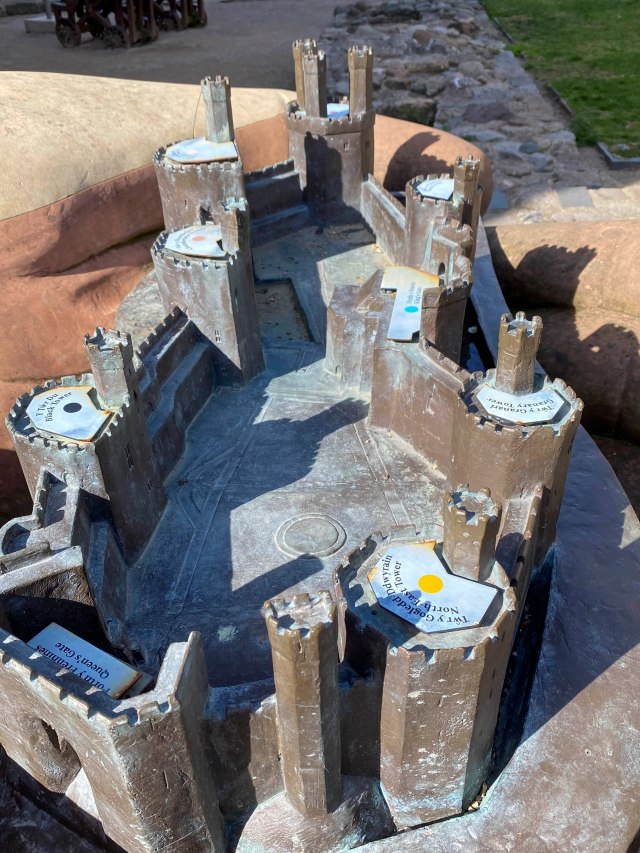
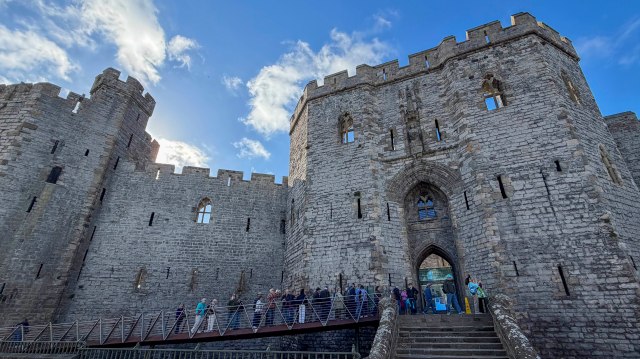
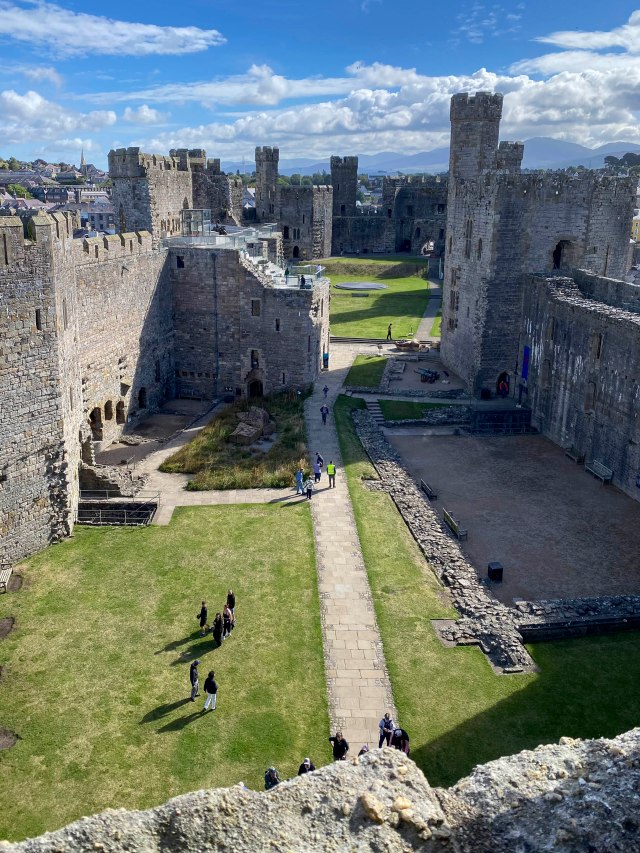
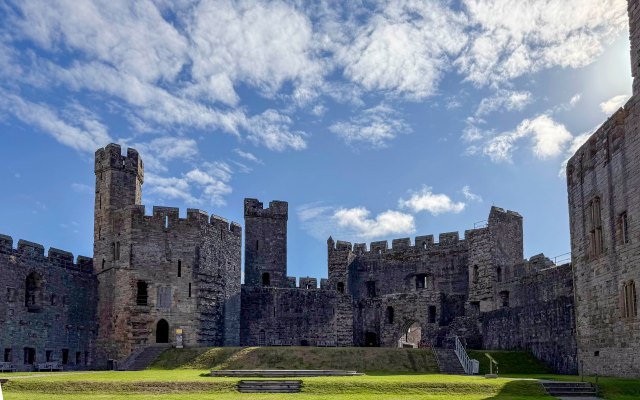
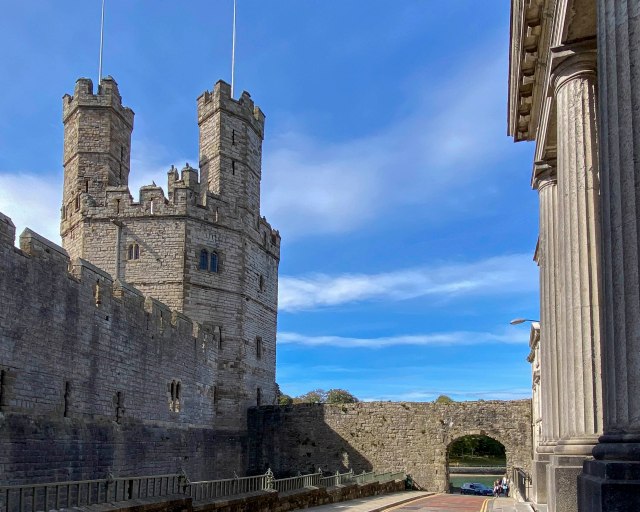
The Island of Anglesey (Wales’s largest) sits in North Wales and Holyhead (the largest town on the island) serves as a very busy ferry port between Britain and Ireland as well as todays cruise port. The Island of Anglesey has much more history than Roman garrisons, Norman strongholds, medieval forts or fanciful follies of the Victorian era. Caernarfon Castle resides here and is the site where Edward II was born in 1284 and was given the honorary title of Prince of Wales. This title, to this day, is conferred on the eldest son of the reigning British monarch. The investiture of Prince Charles as the Prince of Wales took place here in 1969. And, Will and Kate spent the first years of their marriage on this island enjoying peace and freedom that I bet they long for these days!

Not far away, dominating the scenery of northern Wales, is Snowdonia National Park – named for the 3,560′ Snowdon, the highest point in Wales. According to legend, this rugged peak is watched over by the spirit of King Arthur while his Knights of the Round Table lie sleeping underneath the rocky slopes!

Off to Snowdonia National Park.

Also sitting below Snowdon in Snowdonia NP is the very interesting village of Portmeirion. A Welsh architect, Sir Bertram Clough Williams-Ellis, was inspired by a trip to Portofino, Italy and wanted to prove that development could be accomplished without ruining the scenery. He set about building this village from 1925 to 1975, completing it on his 90th birthday. Today it contains primarily shops, cafes and lodgings, including a hotel which sits at the edge of the sea. The village is a bit Disneylandesque but the scenery around is undisturbed and beautiful.

Portmeirion Village
Chess anyone?
Tide is out.
The hotel grounds by the sea with the village towering above.

Some may recognize the name of the village as a china. One of the daughters of the builder was an artist and interested in experimenting with clays to make china. She developed the Portmeirion china which is still produced today, primarily utilizing insects and flowers in the designs. Other descendants rebuilt and manage a castle that was originally on the property. One can also stay here – or just visit the restaurant. If you eat here, be sure to ask for the cheesecake. It is the BEST ever had;-)

Castell Deudraeth’s restaurant provided a delicious lunch …
… including a marvelous cheesecake.

The Welsh are known for long words with few vowels – but, this lovely little village visited briefly, takes the cake. Just try to say it!

Yes, that is actually the name of the town on the train station – all one word.

The Royal history of Wales was left behind for more current, fun, musical history of the 60’s and 70’s in Liverpool. Here everything is THE BEATLES! The best way to get all ‘the skinny’ is to engage a “Fab 4 Taxi Tour”. They will take you everywhere, tell you all the stories and play lots of Beatles music while doing it. We are off.

Time now to visit with The Beatles.

First childhood home seen was that of Ringo’s. It was just down a little lane from The Empress, where his mother worked as a waitress. He moved here before his teen years when his mother married his stepfather – the man who encouraged him to play the drums and allowed Ringo and his friends to practice in their tiny front room.

This painting is on the side of The Empress, the front of which appeared on the sleeve of Ringo Starr’s first studio album, Sentimental Journey.
Window of family living room where Ringo honed his drumming skills.

The homes where John and Paul grew up are now owned by the National Trust, who is preserving and maintaining the sites. Therefore, it is possible to actually go into these premises and is worth the extra fees to see where so much music history developed.

John lived most of his young years with his aunt in property that backed up to Strawberry Field. She was not crazy about this music stuff and told him he needed to get a job and be more serious. Because of this, the only place he could play his guitar was on the tiny front porch. This was probably ok as that’s where the acoustics were the best;-) The home was sold by his aunt after John bought her a new place to live. Fortunately the new owners were huge Beatles fans, so they maintained much of the integrity of the house until taken over by the National Trust.

John’s home 1945-1963. The small room behind the black door is where he could play.
Kitchen maintained as it was back in the day.
John’s bedroom with posters of Elvis and Bridgette Bardot.
John, first wife Cynthia and son Julian lived in this room for a short time in 1963.

John and Cynthia married just as the Beatles were ‘making it’. This was much against the advice of their manager, who thought it would ruin John’s career if he was not single and available to all the screaming teenage girls. Therefore, he told the happy couple there could be no cameras (except Cynthia’s) and the whole affair had to be very private. Unfortunately, Cynthia forgot her camera but she was an artist and drew the only record of their wedding. One can drive by their wedding site.

Cynthia’s sketch to commemorate their wedding at Town Hall, including the jackhammer operator outside the window during the ceremony.

Paul’s home growing up was in an area not too far from John. It, too, was quite small – but unlike John’s aunt, Paul’s father (who was a musician) encouraged Paul’s music. Therefore, ‘the boys’ spent many hours at Paul’s writing and playing. Many of the loved Beatle’s songs were written, composed and recorded in the living room here.

Pipe at the back of the McCartney home used by Paul to sneak out of the house. His bedroom was upstairs with the light on.
Early “recording studio” adjacent to the water closet (with the best acoustics) in the McCartney home.
Many early Lennon/McCartney songs written in this living room. Had to play a few notes.

Unfortunately, George’s house (like Ringo’s) is privately owned. So, no visits there but a look at the outside.

George Harrison’s birth place.

At one point, their manager told them to write about what they knew – their lives, experiences and memories. Paul used to ride the bus from his home to school every morning and it would stop at a spot along Penny Lane for a few minutes while the bus drivers changed. Perhaps Paul looked out his bus window and observed the shelter at the roundabout with a woman selling poppies – or the barber shop just beyond the roundabout that had photographs of every head the barber had the pleasure to know – as well as the bank on the corner with the banker who never wore a raincoat (Mac) even in the pouring rain. Very fun to see the inspiration.

Inspiration for the song of the same name.
“Behind the shelter in the middle of the roundabout”.

And then there is Eleanor Rigby. John and Paul used to sit on the cemetery wall close to their homes and play their instruments. Perhaps they drew a little inspiration here – –

St. Peter’s Woolton Church cemetery where Paul and John sat, smoked, talked and composed.
Perhaps the inspiration for the song? Look at all the lonely people.

As said before, John grew up in his Aunt’s house adjacent to Strawberry Field. A private school was located there and when John was young he would jump over their fence and go play with the kids at the school. This place provided very fond memories for him. Unfortunately, the school ceased to exist and the building deteriorated. Yoko One provided money to help restore the school to be run by the Salvation Army, as well as other funds for the park, knowing how much it meant to John.

Now run by the Salvation Army.
A tribute to the Strawberry Fields boys home (in the background of the picture) where John used to climb the fence to play with other kids.
Rose Garden entrance at Strawberry Field.

Then there are the clubs where The Beatles came to play as they were making it BIG. When they came back to Liverpool from a successful run in Germany, the first place they played was the Casbah Club. If you are in Liverpool and making the circuit, you could skip this one. A much better choice for a visit is the Cavern Club, where they played many times. It is still in operation with continual music throughout the day.

A bit of history, but a disappointing visit.
The Beatles performed here 292 times between February 1961 and August 1963.
Enjoy the live music deep underground…
… as well as an adult beverage.

As said above, Yoko Ono has been back to Liverpool and supported areas of meaning for John. Paul has done the same. He and John first met when they were attending adjacent art and music schools. As the years passed, these schools diminished and the buildings deteriorated. Paul stepped in, renovated the building and created a Liverpool Institute for Performing Arts. He comes back every year to give the diplomas to the graduates. There is a wonderful sculpture outside the buildings depicting different artist’s instruments with name plaques. All makes for a wonderful sight.

Two art schools side by side where McCartney and Lennon attended and got to know each other.

There are many other sights to see in Liverpool – which may or may not be associated with The Beatles. There are a couple of fabulous cathedrals, one of which both John and Paul tried out to be a part of the choir. Paul made it – John did not;-(

St. James Cathedral – the Anglican one.
Paddy’s Wigwam (ha ha) – the Catholic church.

Time with The Beatle’s is up and we must leave our friends behind. It has been a very fun day and would highly recommend to any music fan;-)

Saying farewell to the Fab Four.

We’ll leave you with these messages scattered around Strawberry Field – –


 There is nothing else to say.

E & G – sending peace to all

Waterford, Ireland

Ireland’s oldest city, Waterford was founded by the Vikings in the 9th century. It had its ups and downs in following years until 1783, when the Penrose brothers set out to make “plain and cut flint glass, useful and ornamental”. That set in motion a glass manufacturing industry long without equal. The glassworks Waterford had its ups and downs closing after the 2008 financial crisis. A smaller, leaner version rose from the flames in 2010 with a new factory, visitor center and the largest collection of Waterford crystal in the world right in the heart of town.

Arriving in Dunmore (the port for Waterford)…
…to be tendered ashore for a bus ride into Waterford.

If you are not a crystal person, hop a ride on the shortest ferry ride ever across the River Suir to Waterford Castle. Built on Norman foundations that date back some 800 years, the castle was built in the 1700’s and is now a luxury hotel on its own small island.

Shortest ferry ride in memory.

This castle is the real deal with authentic turrets, gargoyles and battlements. You can stay in one of its 19 rooms and dine – or have tea – in the grand Munster Room restaurant or play a round of golf on its 18 hole course. This particular day the hotel and restaurants were closed due to a full buy-out wedding event. (They host one almost every weekend!) So – it was a cup of tea in the grand hallway before they closed for the wedding, a walk through the lovely garden and a delicious lunch of fish and chips in the golf clubhouse. All in all – a wonderful morning and afternoon.

Waterford Castle.
The living room is now a hotel lobby and reception area – – –
– – – Where we had a spot of tea before a wander.
Colorful gardens.
Great gazebo for a perfect picture;-)
Off to the golf clubhouse for lunch.
Quiet now but very busy with golfers lunching before their tee times.

For more details check out that great reference – “1,000 Places to See Before You Die”. You’ll find it there. For now, it is time to leave Ireland behind for a few days and head to Wales. E & G leave you with this thought – –

Wherever life takes you.

E & G – with love


On to a Wee Bit of Ireland

The Dingle Peninsula is the westernmost point in Europe and home to the reported prettiest town in all of County Kerry – Dingle. It is a cheerily painted town that provided the backdrop for the filming of “Ryan’s Daughter” with Robert Mitchum in 1969. It is also home to many fish and chip restaurants and the highest pub per person ratio for its 2000 residents;-) Come and make yourself at home.

Delicious fish & chips at Harrington’s in the red building.

The neighboring peninsula in County Kerry is home to Killarney, an attractive village adjacent to the ivy-covered Victorian mansion – Muckross House – and entrance to Killarney NP. Killarney is also a good starting point for ‘The Ring of Kerry’, which is a 110 mile coast-hugging road that provides breathtaking vistas of land, sea and sky! One can drive this or be really ambitious and walk the 120 mile Kerry Way. Even a portion (as done on this trip) will provide incredible views of green as far as one can see;-)

Enroute to Killarney Nat’l Park, the county’s centerpiece, and Muckross House.

Muckross House was completed in 1843 for Henry Arthur Herbert and his Scottish wife. It sits close to the eastern shore of Muckross Lake and hosted Queen Victoria and her family in August, 1861. The additions and adornments added for the Queen’s visit basically bankrupted the Herberts and the house was sold in 1899 to a member of the Guinness brewing family. In 1911 it was purchased by an American and given to his daughter as a wedding present. The daughter died quite unexpectedly three years later and her husband was so distraught, he did not want to continue living in the house. At that time, her husband and her parents presented Muckross House and its Estate to the Irish Nation and it became Ireland’s first National Park on January 1, 1933.

Muckross House.
The grand entry hall also served as a ballroom when entertaining.
The grand dining room with curtains woven in Paris installed for the Queen’s visit.
Hand-painted Chinese silk wall covering in the billiard room.
View across the garden to Muckross Lake.
Queen Victoria’s boudoir during her stay.
The Queen’s bedroom.

Time is up for this visit! One must get back on the road and endure those incredible sights along a slight portion of that ‘Ring of Kerry’ – –

Gorgeous green farmlands with the darker green ‘hedgerows’ falling to the Atlantic.
Farewell Dingle.

Another day – another port. Today is Cork, which hosts a great Jazz festival. Unfortunately, not this time of year;-( Having been here before (see https://egmagicbustour.com/2022/10/07/irelandbriefly/) , today would just be a wander around town kind of day. Sometimes those turn up unexpected surprises that are quite pleasing. This was one of those days as a turn to the right led us into The English Market. How fabulous with everything from fresh fish and vegetables to quite enticing bakery items.

The bustling English Market in Cork.
That’s one BIG tuna.

Continuing the wander, Saint Fin Barre’s Cathedral came into view. It looked so incredible from the street, it needed investigation. The site of the cathedral dates to the seventh century when a monastery was founded here. Buildings were added and the city of Cork grew around it. In 1864 the then existing cathedral was demolished and the present structure was built in its place. It just happened that an organ concert was taking place and it was fantastic!

St. Fin Barre’s Cathedral.
A small portion of the 4,000 pipes. Amazing!
In case one wants to go easy on their knees – just loved the shot;-)
View from the church cemetery.

Just a block away was the Elizabeth Fort. It was built around the early 1600’s to protect the English settlement from the Gaelic chieftains still in power in parts of Ireland. Unfortunately, by the time of completion, Queen Elizabeth had died! It still stands as one of the most important and best preserved urban artillery fortifications in Ireland. How could one not go and climb around in this?

400 year old fort next to the cathedral.

What a fun, unplanned day. But, time to move on.

The pot of gold seemed to be at the base of the ship!

More of Ireland to see – like Waterford tomorrow;-)

E & G – enjoying the luck of the Irish everywhere we look.


A Bit More England – Cornwall

At the far southwestern tip of the English mainland, where the country plunges over sheer cliffs into the Atlantic, sits the county of Cornwall and Land’s End. Just a few miles east is the fabulous castle topped island of St. Michael’s Mount. It is attached to the mainland by nothing more than a cobbled (and slippery) causeway that is covered at high tide. It was originally created in 1135 as a sister abbey to the perhaps more famous Mont St-Michel in Normandy. But, approximately 600 years ago the property came to the St. Aubyn family, who still live in a portion of the castle.

Since it is high tide – board the small 12 passenger boat and be whisked away to the island. You will need a ‘token’ (exchanged for the ticket purchased at a small stand in the parking lot) to get a seat on the boat. That token reflects the Cornish legend that St. Michael’s Mount was home to a terrifying 18 foot giant who built the island from large granite rocks stolen from the mainland along with cattle and crops. A young local farm boy rowed across the water, dug a deep pit and enticed the Giant out to the pit where the giant fell in. His heart (in the shape of a rock) is on the path on the way up to the castle – and is in each token to board the boats!

Ticket to ride.
Destination in sight.

Once on the island the fun begins. Hike up the very uneven stone steps to the castle and explore.

Looks spooky from here.

On the way up one can see a watchtower and gun batteries. Inside there is the refectory for the priory, which continued to act as the main dining room until the 1950”s, Smoking room, drawing rooms and a church.

This family must have been ok – they liked golf!

The South Terrace has been extended from its original dimension and is now the roof of the East Wing where the family still lives today. It also provides beautiful views of the surrounding area and the back of the simple medieval church that is a part of the castle.

Beautiful stonework.
Inspecting defensive positions.
Chapel exterior.

The church was dedicated to St. Michael and is still used today for Sunday services. It was first built in 1135, but largely rebuilt in the 14th century. Its simplicity is striking – even with a small, but beautiful, pipe organ.

Lovely pipe organ…
…and stained glass windows in the chapel.

If one times their visit approximately, they can walk across that cobbled causeway going out or coming back. This particular day the timing was for a nice walk back to shore. So – time to head down and wander across;-)

Low tide – hurry to walk back to the shore.

One last view before running off. The westernmost town in England sits just across the bay – Penzance, as in the Gilbert and Sullivan’s “The Pirates of …..”. Had to get this in as a line in “Pretty Woman” has become a standard of this writer’s. In the movie, after the opera that she is quite taken by, an older woman asks how she liked it and she replies – “it was so good I almost peed in my pants”. When the older woman looks flustered, Richard Gere covers by saying – “she liked it even better than Pirates of Penzance!” That has become my catch phrase for – “need to go!”

A view across the bay at Penzance.

A very fun, energizing day. Don’t miss St. Michael’s Mount if in the area. Fantastic! But, again, time is up and more ports are calling.

Farewell Falmouth.

E & G – still enjoying all the new sights and making lots of memories;-)